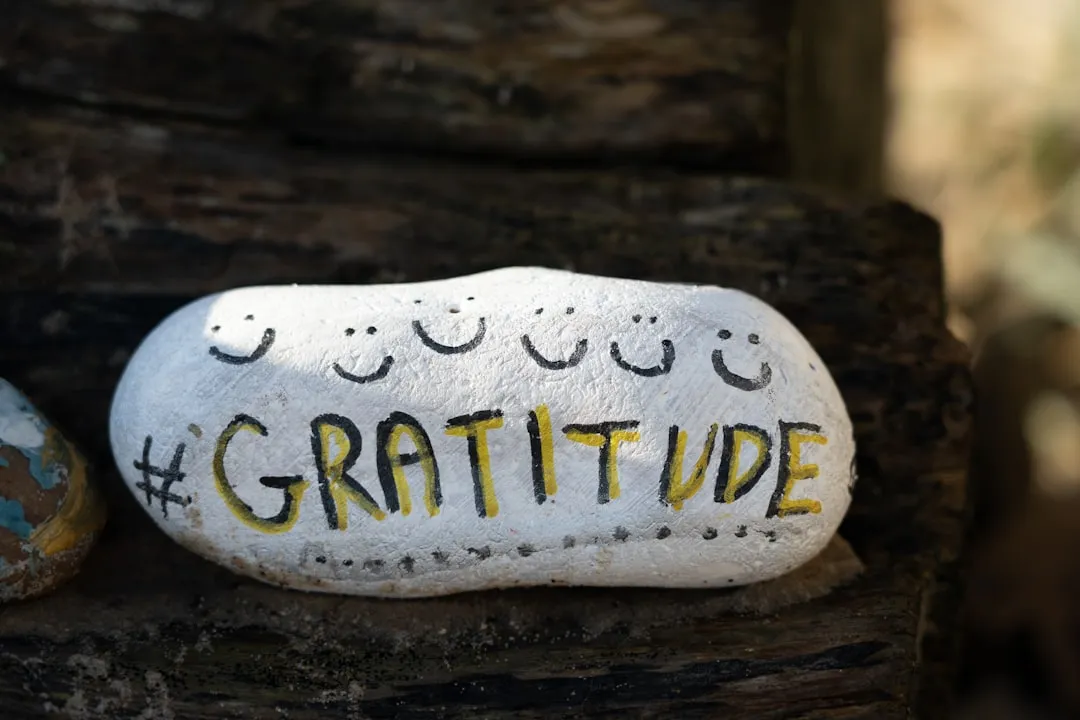
We often talk about faith as something we do, a series of actions, a list of beliefs we assent to. But what if faith isn't just about what we believe or what we perform, but about how we perceive? What if the bedrock of a faithful life isn't just our own strength, but our ability to see the landscape of our existence through a lens of thankfulness? We've been exploring this idea, this notion that gratitude is not merely a pleasant emotional response, but a fundamental building block for a robust and resilient faith. It's about recalibrating our internal compass, about understanding that the world, and our place within it, is far more rich and divinely ordered than we often perceive. We've seen this principle gaining traction, not just in spiritual communities, but in research laboratories and counseling offices. The year 2026, we're hearing, is being framed as a year to unlock this very power of gratitude.
We build our lives brick by brick, choice by choice. And just as a physical structure needs a solid foundation to withstand the inevitable storms, so too does our spiritual life require a stable base. We've come to understand that gratitude is that foundational material. It's not just about saying "thanks"; it's about a fundamental reorientation of our perspective, a conscious choice to see the world not through the lens of deficiency, but through the lens of abundance. This shift in perception is crucial because reality itself is, to a significant degree, interpreted. As we've encountered reminders from sources like Christ Church USA's "Gratitude Unlocked" sermon series, gratitude has the power to reframe our understanding of what is actually happening around us. It allows us to see the divine hand at work, even in the mundane, even in the challenging. This isn't about ignoring difficulties; it's about refusing to let those difficulties define the entirety of our experience. It's about recognizing that even amidst hardship, there are elements we can be thankful for, elements that speak to a larger, benevolent order.
Framing Our Reality: The Cognitive Power of Gratitude
The idea that we are actively constructing our reality through our thought patterns is not new, but when we apply it to gratitude, its implications for faith become profound. When we train ourselves to look for things to be grateful for, we are essentially reprogramming our internal search engine. Instead of constantly scanning for what's wrong, for what's missing, we begin to preferentially notice what's right, what's been given. This practice, as emphasized by "Complete in Him Blog," acts as a powerful conduit toward seeing God's will in continual thankfulness. It's a proactive measure, a way to deliberately shift our perspective from a place of lack to a place of provision. This cognitive reframing isn't a passive process; it requires intentionality. It's like learning to focus a camera: we can zoom in on the dust specks, or we can adjust the lens to capture the vast expanse of the sky. Gratitude encourages the latter, allowing us to see the broader, more positive panorama of our lives and circumstances.
The Research Behind the Reframing
The notion that gratitude has tangible benefits is increasingly being supported by empirical evidence. We're not just talking about a vague feeling; we're talking about measurable psychological and even physiological changes. Studies referenced in discussions around 2026 intentions, such as those associated with "Personal Balance Counseling," highlight that incorporating gratitude practices, like daily journaling, can significantly reduce stress levels. This is often linked to a decrease in cortisol, the body's primary stress hormone. Furthermore, this intentional focus on appreciation is shown to boost happiness and enhance resilience, making us better equipped to handle life's adversities. This isn't just anecdotal; it's observable. When we consciously acknowledge the good, our brains are wired to respond positively, creating a virtuous cycle that strengthens our emotional and mental fortitude.
Gratitude as an Anchor in Turmoil
Consider the metaphor of a ship at sea. When the waves crash and the wind howls, a ship without a proper anchor is at the mercy of the storm. In the same way, our souls can be tossed about by the inevitable challenges of life. Colossians 2:6-7 speaks of being "rooted and built up in him." Gratitude, we're learning, acts as a powerful anchor for our souls. It grounds us in the faithfulness we have already experienced, preventing us from being swept away by present difficulties. The "Gratitude Unlocked" series posits that this anchoring is essential for navigating instability. It's not just about finding comfort during the storm, but about having a steadfast point of reference that predates the storm and will outlast it. This steadfastness comes from remembering past provisions, past deliverances, past moments of grace, and acknowledging them as evidence of an enduring, reliable presence.
Cultivating a Mindset of Thankfulness: The Daily Discipline
The Power of the Gratitude Journal
One of the most accessible and effective tools for cultivating this daily discipline is the gratitude journal. This isn't about writing a novel; it's about brief, consistent entries. The act of writing down things we are thankful for, no matter how small, serves to solidify them in our minds. It provides a tangible record of blessings, a "thank-you log" for the universe, so to speak. The "Personal Balance Counseling" insights highlight this practice as a flexible alternative to rigid resolutions, acknowledging its effectiveness in promoting well-being. When we commit to jotting down a few things each day – perhaps a warm cup of coffee, a kind word from a stranger, a successful task completion – we are actively training our brains to seek and acknowledge these positive aspects of our experience. Over time, this habit can profoundly alter our outlook.
Shifting Focus: From What's Lacking to What's Present
A common pitfall in our spiritual journeys is an overemphasis on what we don't have, what we haven't achieved, what God hasn't yet delivered. This focus on deficiency can breed discontent and undermine our faith. The advice from "Jessie & Laurent Blog" about shifting focus to small joys is precisely about countering this tendency. It's about training ourselves to see the blessings that are already present, rather than fixating on those that are absent or delayed. This shift is not about complacency; it's about an accurate assessment of our situation. It's recognizing that even in challenging times, there are present joys, present mercies, present opportunities to experience grace. This perspective shift is a vital part of building a resilient faith, one that isn't easily shaken by unmet expectations.
The Echoes of God's Faithfulness: Recognizing the Source
When we speak of gratitude, we are not just acknowledging pleasant circumstances; we are acknowledging the ultimate source of all good things. Psalm 107:1, celebrated by the "Christian Yoga Association," reminds us to give thanks because God is good, and his love endures forever. This is a crucial distinction. Our thankfulness is not a transactional exchange, but a response to an inherent goodness and faithfulness that is already present. It's recognizing that the blessings we enjoy are not merely accidental, but are expressions of a consistent, loving divine engagement with creation. This understanding transforms gratitude from a superficial politeness into a profound recognition of divine action and character.
Seeing Blessings as Divine Deposits
We can view the blessings in our lives as divine deposits into our spiritual accounts. Each act of kindness, each moment of clarity, each answered prayer, each provision we receive – these are all valuable contributions from a benevolent provider. The "Complete in Him Blog" encourages us to see these blessings, to recognize them as indicators of God's ongoing work. This perspective helps us move away from a view of life as a random series of events and towards an understanding of a purposeful, guiding hand. It transforms ordinary moments into sacred encounters, imbued with the significance of their divine origin.
Gratitude as a Witness to Enduring Love
The emphasis on "enduring love" by the "Christian Yoga Association" connects directly to the nature of gratitude. Our ability to be thankful is, in part, a testament to the enduring nature of divine love. It means that even when we falter, even when we fail to appreciate, that love, and the blessings it brings, continues. Gratitude is our response to this steadfastness, our acknowledgment that we are the recipients of a love that is not contingent on our performance or our mood. It's a recognition of an unwavering commitment, a faithfulness that underpins the entirety of our existence.
Overcoming the Shadow of Ingratitude: The Enemy Within and Without
While gratitude is a powerful force for good, we must also acknowledge the pervasive presence of ingratitude, both in ourselves and in the world around us. This shadow can dim our perception and weaken our faith. The warnings found in 2 Timothy 3:1-2 about difficult times and ungrateful people are a stark reminder that ingratitude is not a minor flaw but a significant challenge to spiritual vitality. Recognizing this enemy is the first step in combating its influence. We must be vigilant against the subtle creep of discontent and the overt manifestations of thanklessness.
The Subtle Erosion of Complacency
Complacency is a particularly insidious form of ingratitude. It's the state of being so accustomed to good things that we cease to recognize them as gifts. We become desensitized to the blessings, treating them as entitlements rather than graces. This can happen to any of us. We wake up in a comfortable home, eat a nourishing meal, have the ability to move and think – these are extraordinary privileges that can easily become invisible under the weight of routine. The "Complete in Him Blog's" call for "continual thankfulness" is a direct antidote to this erosion, urging us to actively resist becoming desensitized to the constant flow of blessings.
The External Forces of Negativity
Beyond our internal struggles, we are also bombarded by external forces that foster ingratitude. Media, societal narratives, and even personal interactions can often highlight problems, injustices, and perceived shortcomings. The "Gratitude Unlocked" series mentions the need to combat ingratitude, suggesting that it's an active battle against prevailing cultural currents that often celebrate entitlement and complain. We must consciously choose to filter out this pervasive negativity and actively seek out the positive, reframing the narrative through the lens of thankfulness.
The Transformative Power: How Gratitude Rewires Our Faith
Ultimately, the practice of gratitude is not just about feeling good; it's about becoming better. It's about a profound transformation that reshapes our very identity and strengthens our connection to the divine. This isn't a superficial makeover; it's a deep-seated rewiring of our spiritual circuitry. We've seen that this transformation is the natural outcome of embracing a life of thanks.
Strengthening the Bonds of Faith
When we consistently practice gratitude, we are not just affirming our beliefs; we are actively strengthening the very framework of our faith. Each act of thankfulness is like adding a new strand of fiber to a rope, making it stronger and more resilient. When we look back at our "Thank-U-Grams," our journals, our memories of God's provision, we gain a tangible testimony to his faithfulness. This personal history of answered prayers and sustained grace becomes a powerful bulwark against doubt. As the "Complete in Him Blog" suggests, this shifting perspective strengthens faith, and this strengthening is not passive; it's earned through deliberate engagement with the thankfulness.
The Ripple Effect of a Grateful Life
A life lived with gratitude has a ripple effect, touching not only our own lives but the lives of those around us. When we are genuinely grateful, our interactions tend to be more positive, more patient, and more generous. This can, in turn, inspire gratitude in others, creating a virtuous cycle of appreciation that can positively impact our families, our communities, and even our workplaces. The research highlighted by "Personal Balance Counseling" on boosting happiness and resilience is not just about individual well-being; it speaks to a broader impact on interpersonal dynamics. A grateful person is often a more loving, more compassionate, and more effective human being, making them a more valuable contributor to the world.
In conclusion, the journey toward a faithful life is, in many ways, a journey toward a more profound and consistent gratitude. It is about consciously choosing to see the world through the lens of thankfulness, recognizing the divine hand in every aspect of our existence. This isn't always easy. It requires discipline, intentionality, and a willingness to actively combat the forces of negativity and complacency. But the rewards are immense: a strengthened faith, a more resilient spirit, and a life that is not just lived, but truly appreciated. As we move forward, let us embrace gratitude not as an occasional sentiment, but as the foundational principle upon which we build a life of enduring faith.
FAQs
What is the connection between gratitude and faith?
Gratitude and faith are closely linked because expressing thankfulness often strengthens a person's trust and belief in a higher power or the goodness of life. Gratitude helps individuals recognize blessings and fosters a positive outlook, which can deepen their spiritual faith.
How does practicing gratitude influence daily life?
Practicing gratitude can improve mental well-being, increase happiness, and reduce stress. It encourages people to focus on positive aspects of their lives, which can lead to more meaningful relationships and a stronger sense of purpose, all of which contribute to a faithful and fulfilling life.
Can gratitude be considered a spiritual discipline?
Yes, many religious and spiritual traditions view gratitude as a discipline that cultivates humility, contentment, and a closer relationship with the divine. Regularly expressing gratitude is often encouraged as a way to nurture faith and spiritual growth.
What are some common ways to practice gratitude?
Common practices include keeping a gratitude journal, daily prayer or meditation focused on thankfulness, expressing appreciation to others, and reflecting on positive experiences. These activities help individuals maintain a grateful mindset and reinforce their faith.
Does gratitude have any scientific benefits related to faith?
Scientific studies have shown that gratitude can enhance emotional health, improve sleep, and increase resilience. These benefits support a stable and faithful life by promoting mental clarity and emotional balance, which can make spiritual practices more effective and meaningful.