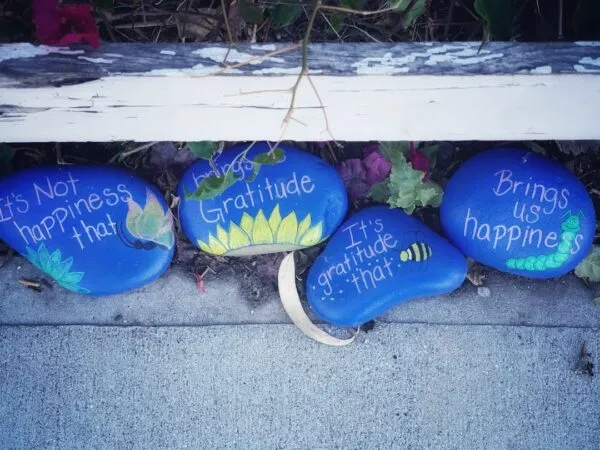
We live in a world overflowing with data, where information assaults our senses from every direction. Every day, we are bombarded with news cycles, social media feeds, and the relentless demands of our own lives. In this constant hum of activity, it's easy to lose sight of the subtle, yet profound, movements of a higher power. We often find ourselves adrift, pulled by the currents of our circumstances, rather than anchored by a deeper understanding. But what if there was a simple, yet powerful, mechanism that could reorient our perspective, allowing us to perceive the divine tapestry woven into our everyday existence? We believe there is such a mechanism, and it's not a new technology or a complicated spiritual practice. It's gratitude.
We, as humans, are remarkably adept at focusing on what's wrong. Our brains are wired for survival, constantly scanning for threats and deficiencies. This evolutionary trait, while beneficial in certain contexts, can create a significant blind spot when it comes to recognizing the good, the grace, and indeed, the divine intervention in our lives. We tend to operate on a scarcity mindset, fixated on what we lack rather than what we possess.
The Problem of Negative Framing
Consider our daily interactions. How often do we complain about a minor inconvenience rather than express thanks for a fundamental comfort? The coffee might be cold, but the fact that we have access to coffee at all, or a warm home to drink it in, often goes unacknowledged. This negative framing, a pervasive habit, obscures the countless blessings that underpin our existence.
The Illusion of Control
Another significant barrier is our inherent desire for control. When things don't go according to our meticulously crafted plans, we often feel frustration or despair. We attribute challenges to bad luck or personal failings, rather than seeing them as potential avenues for growth or, indeed, as part of a larger, unseen narrative. This illusion of control prevents us from surrendering to a higher purpose and recognizing the subtle hand of God at work, even in adversity.
The Tyranny of the Urgent
In our fast-paced society, the urgent often eclipses the important. We are constantly chasing deadlines, responding to emails, and managing schedules. This relentless pursuit of the immediate leaves little room for reflection, contemplation, or the deliberate practice of gratitude. We effectively create a self-imposed spiritual blackout, where the subtle whispers of divine presence are drowned out by the clamor of our daily demands.
Gratitude as a Lens: Sharpening Our Vision of God's Activity
Imagine a camera lens that, when properly adjusted, brings a blurry image into sharp focus. Gratitude functions in a similar manner for our spiritual vision. It's not merely a pleasant emotion; it's a deliberate act, a conscious decision to shift our focus and, in doing so, to fundamentally alter our perception of reality. As (in)courage insightfully observes, gratitude "opens eyes to see God working now, shifting perspective to His faithfulness amid pain or waiting" (Nov 2025). We aren't just feeling good; we are actively seeking, and consequently, finding.
The Practice of Deliberate Acknowledgment
This is not about forced optimism. It's about a systematic recalibration of our attention. We are encouraged to “list blessings and entering His presence with thanks” (Psalm 100). This tangible act of enumeration forces us to confront the abundance that surrounds us, rather than dwelling on scarcity. It's akin to a scientist meticulously cataloging data; the more we document instances of grace, the more undeniable the patterns become.
Shifting from Complaint to Celebration
When we commit to thankfulness, as Complete in Him advocates for 2026, we embrace "God's will (1 Thess 5:18)" (Dec 31, 2025). This isn't a passive acceptance; it's an active redirection of our internal monologue. Instead of lamenting what's missing, we begin to celebrate what's present. This transformation in posture, from complaining to praising, acts as a powerful beacon, illuminating the "unseen work" of God in our lives.
From Casual Observation to Intentional Appreciation
Think of a casual stroll through a garden versus a guided tour by a botanist. In the latter, we learn to appreciate the intricate details, the scientific marvels, and the hidden beauty. Gratitude provides this guided tour for our spiritual landscape. It moves us from passive observation to intentional appreciation, allowing us to discern the fingerprints of the divine in even the most commonplace occurrences.
The Transformative Power of a Grateful Lifestyle
Gratitude is not a one-time event or an occasional mood enhancer. It is, as the Speak Up Conference highlights, "a lifestyle that pays attention to God's daily goodness, even mundane" (recent). This intentional, consistent practice acts as a transformative agent, reshaping not only our perception but also our very being.
The Daily Awakening
Imagine waking up each day with an internal compass pointing towards God's goodness. This is the essence of a grateful lifestyle. It awakens our soul, allowing us to "see Trinity's love in challenges" rather than succumbing to despair (Speak Up Conference, recent). Challenges, then, are no longer obstacles but opportunities to witness divine strength and provision. This daily awakening shifts our default setting from anxiety to anticipation, from dread to wonder.
Moving Beyond Our Failures
Patheos Graceful Awakening (Jan 2026) suggests a crucial aspect of this transformation: reflecting "on blessings over failures." We are often held captive by our past mistakes, allowing them to define our present and dictate our future. Gratitude offers a liberating alternative. By consciously focusing on the blessings, even amidst our imperfections, we open ourselves to "growth in purpose via faith." God's grace, made manifest through gratitude, allows us to transcend our limitations and step into a future filled with potential.
Cultivating a Culture of Awe
The Trans-European Division emphasizes the resurgence of awe through gratitude. In our often cynical and jaded world, awe is a rare commodity. Yet, gratitude has the power to "rediscover awe...to see God anew" (recent). This isn't about blind faith; it's about a renewed perspective, an appreciation for the grandeur and intricacy of creation, and a recognition of the ultimate architect. This shift, from anxiety-driven strategies to a presence-led approach, fundamentally alters our leadership and our lives, grounding us in something far greater than ourselves.
Practical Steps: Cultivating Gratitude in Our Lives
We understand that adopting a grateful lifestyle can seem daunting amidst the constant demands of modern life. However, like any skill, it improves with practice. We have identified several actionable steps that we can all integrate into our routines to cultivate this transformative habit.
The Gratitude Journal: A Repository of Grace
One of the most effective and widely recognized methods is maintaining a gratitude journal. This is not merely a diary of events, but a dedicated space to record specific instances where we have experienced goodness, provision, or unmerited favor. The act of physically writing down these blessings solidifies them in our minds, creating a tangible record of God's consistent presence. We can make this a daily or weekly practice, reflecting on both monumental and seemingly trivial occurrences.
The Daily Acknowledgment: A Moment of Pause
Throughout our day, we can integrate small moments of intentional acknowledgment. When we sip our morning coffee, for instance, we can pause to appreciate the warmth, the flavor, and the simple comfort it provides. When we encounter a kind word from a stranger, we can silently offer thanks. These micro-moments of gratitude, accumulated over time, create a powerful ripple effect, subtly reshaping our internal landscape and fostering a perpetual awareness of grace.
Expressing Thanks to Others: The Echo of Appreciation
Gratitude is not meant to be a solitary endeavor. We are called to "express thanks to others." When we verbalize our appreciation, we not only uplift the recipient but also reinforce our own grateful mindset. A simple "thank you" can transform a mundane interaction into a meaningful connection, fostering a positive cycle of acknowledgment and appreciation. This also serves as a tangible expression of God's love working through us, making His presence visible in our relationships.
Intentional Prayer of Thanks: Entering His Presence
Psalm 100 invites us to "enter His presence with thanks." This means going beyond perfunctory prayers and engaging in deliberate, heartfelt expressions of gratitude to God. We can dedicate specific prayer times to simply enumerate our blessings, acknowledging His sovereignty and faithfulness in every aspect of our lives, even when circumstances are challenging. This intentional communion, centered on thanksgiving, deepens our spiritual connection and strengthens our trust in His ongoing work.
The Long-Term Impact: A Transformed Vision, A Transformed Life
As we consistently practice gratitude, we find that our internal narratives begin to shift. The default setting of complaint gives way to a deeper sense of contentment and peace. We become more resilient in the face of adversity, better able to discern the silver linings and the lessons embedded within our challenges. We stop seeing problems as insurmountable roadblocks and begin to view them as opportunities for divine intervention.
The consistent application of gratitude acts as a spiritual corrective lens, enabling us to see God's hand at work not just in extraordinary moments, but in the ordinary fabric of our daily lives. This is not about denying pain or ignoring hardship; it's about expanding our capacity to perceive goodness, even amidst difficulty. It's about recognizing that even in moments of waiting or suffering, God remains faithful, orchestrating events and weaving a narrative that transcends our immediate understanding.
Ultimately, a grateful lifestyle transforms our spiritual vision, allowing us to see God's work not as an intermittent phenomenon, but as a constant, unwavering presence. We cease to be passive observers and become active participants in recognizing and celebrating the divine tapestry being woven all around us. By adjusting our lens and embracing gratitude as a way of seeing, we unlock a richer, more meaningful existence, one deeply anchored in the knowledge of God's enduring love and unwavering faithfulness. This, we believe, is a path toward a life lived not in scarcity, but in abundant awareness of His continuous grace.
FAQs
What does it mean to see God's work through gratitude?
Seeing God's work through gratitude means recognizing and appreciating the blessings, events, and experiences in life as manifestations of God's presence and action. It involves acknowledging God's hand in both the big and small moments and responding with thankfulness.
How can practicing gratitude enhance one's spiritual life?
Practicing gratitude can deepen spiritual life by fostering a positive outlook, increasing awareness of God's presence, and strengthening faith. It encourages individuals to focus on the good in their lives, which can lead to greater contentment and a closer relationship with God.
Are there specific ways to cultivate gratitude in daily life?
Yes, cultivating gratitude can be done through daily practices such as keeping a gratitude journal, prayer or meditation focused on thankfulness, reflecting on blessings, and expressing appreciation to others. These habits help shift attention toward recognizing God's work consistently.
Is gratitude mentioned in religious texts as a way to acknowledge God's work?
Yes, many religious texts, including the Bible, emphasize gratitude as a vital response to God's blessings. For example, scriptures often encourage believers to give thanks in all circumstances as a way to honor and recognize God's ongoing work in their lives.
Can gratitude influence how one perceives challenges or difficulties?
Gratitude can positively influence perception by helping individuals find meaning or lessons in challenges, viewing them as part of God's plan or growth process. This perspective can foster resilience and hope, transforming difficulties into opportunities for spiritual development.