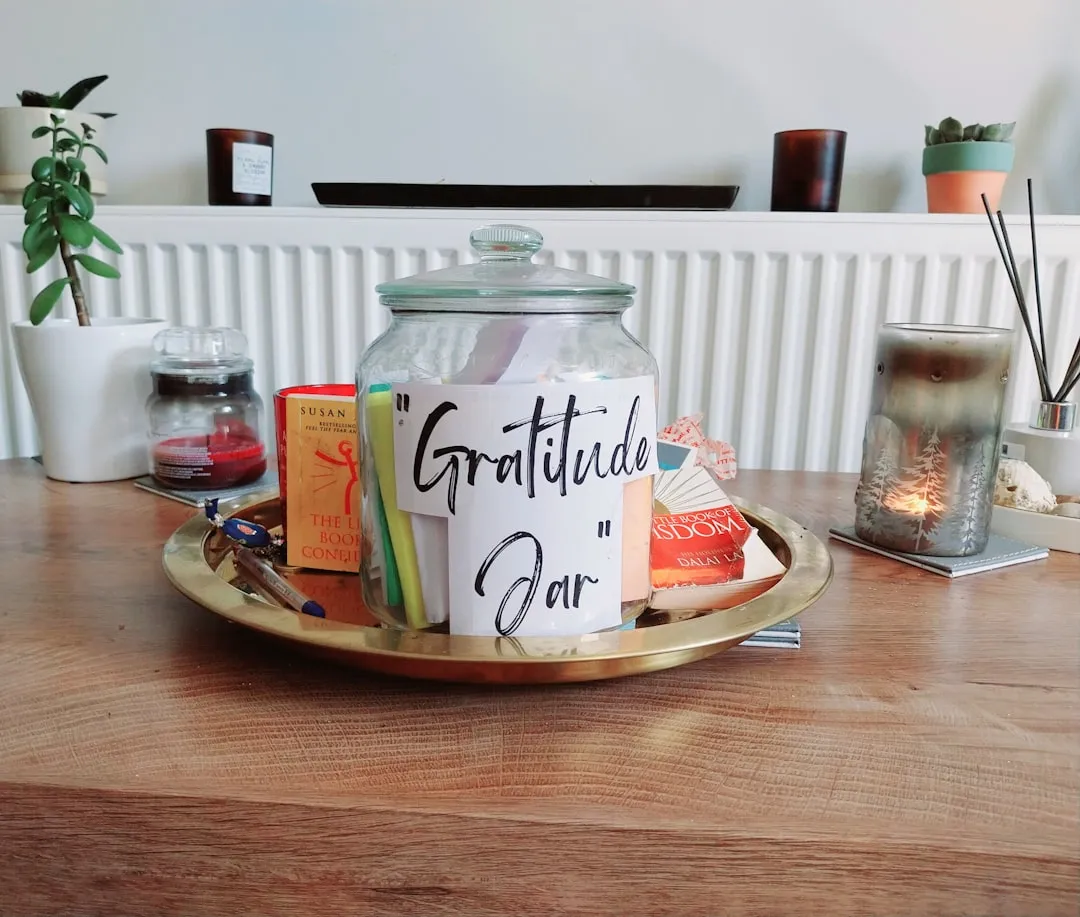
We're all familiar with the concept of gratitude, often framed as a pleasant emotion or a polite social nicety. Yet, when we examine its deeper mechanisms, we discover that gratitude isn't merely a feeling; it's a potent catalyst, a fundamental building block for a life characterized by a sustained, expansive joy. This isn't about fleeting happiness, but a profound state of being that emerges when we consistently acknowledge the positive elements in our existence.
We often navigate our lives, much like a traveler through a dense forest, focused solely on the obstacles directly in our path. We fixate on the thorns and the tangled undergrowth, neglecting to lift our gaze to the dappled sunlight filtering through the canopy or the resilience of the trees themselves. Gratitude, in this metaphor, is the act of consciously shifting our focus. It's about recognizing that even within a challenging journey, there are elements of beauty, support, and provision. When we systematically engage our cognitive processes to identify and appreciate these elements, we initiate a transformative internal journey that culminates in what we describe as "joy that overflows."
This concept, while simple to articulate, demands a deliberate and consistent practice. It's not a passive state we wait for, but rather an active posture we cultivate. We are, after all, the architects of our internal landscapes.
The Problem: When Gratitude Stagnates
Before we can appreciate the overflow, we must first understand the stagnation. Many of us approach gratitude as a transactional exchange. We express appreciation after a positive event, much like a thank you note sent for a received gift. While this is a valuable social convention, it falls short of unlocking the deeper potential of gratitude.
The Transactional Trap
We view gratitude as an obligation, a reciprocal act. "You did something good for me, so I will thank you." This limited perspective confines gratitude to specific instances, preventing it from permeating our overall worldview. We become reliant on external stimuli to trigger our appreciation, leaving us vulnerable to periods of discontent when such triggers are absent.
The Scarcity Mindset Barrier
When we operate from a scarcity mindset, our focus inevitably gravitates towards what we lack. We see the half-empty glass, the missing piece of the puzzle, the unfulfilled desire. This mental framework acts as an impenetrable barrier to genuine gratitude. How can we acknowledge abundance when our primary lens is deficiency? This mindset can be insidious, subtly influencing our daily thoughts and interpretations of events, creating a perpetual sense of unease.
The Pursuit of Perfection
Another common pitfall is the belief that things must be perfect to warrant gratitude. We postpone appreciation until all conditions are ideal, a state that, as we universally understand, rarely materializes. This waiting game prevents us from recognizing the good within the imperfect, the beauty within the flawed, and the strength within the struggle. Ultimately, this pursuit of an unattainable ideal leaves us perpetually dissatisfied.
The Solution: Cultivating a Deliberate Practice of Gratitude
Moving beyond stagnation requires a reimagining of gratitude, transforming it from a fleeting emotion into a cultivated practice. This isn't about forcing ourselves to be happy, but about intentionally redirecting our cognitive resources.
Identifying the Small Wins
Historically, human survival has often depended on our ability to identify threats and potential dangers. This evolutionary bias means our brains are naturally wired to spotlight problems. To counteract this, we must consciously train ourselves to spot the "small wins." This could be anything from a smoothly functioning piece of technology to a kind word from a colleague, a moment of unburdened silence, or even the simple act of breathing without conscious effort. Each small win, when acknowledged, is like a deposit into a mental wellspring.
The Language of Appreciation
How we articulate our gratitude profoundly impacts its internal effect. Merely thinking "thank you" is a start, but expressing it, whether verbally, in writing, or even just in specific internal monologue, deepens the impact. When we name what we are grateful for, we solidify its presence in our consciousness. This linguistic reinforcement is a powerful tool in rewiring our brain's default settings. We are, in essence, writing a script for our internal narrative.
Gratitude as an Anchor in Adversity
Perhaps the most potent application of gratitude is its ability to serve as an anchor during challenging times. When faced with difficulty, our natural inclination is to focus on the negative. However, by intentionally seeking out elements of gratitude – the support of a loved one, a lesson learned, the resilience we discover within ourselves – we can prevent ourselves from being completely overwhelmed. It doesn't negate the pain, but rather provides a counterbalance, much like a steadying hand in a storm.
The Mechanism of Overflow: How Gratitude Fuels Joy
Now, let's explore the dynamic process by which consistent gratitude translates into an overflowing sense of joy. We aren't suggesting a direct causal link in the sense of a simple equation. Rather, it's a cascading effect, a complex interplay of cognitive shifts and emotional responses.
Shifting Our Perceptual Filter
Our brains are constantly filtering information. When we regularly practice gratitude, we effectively reprogram this filter. We begin to notice more of the positive, the supportive, and the abundant aspects of our lives. This isn't wishful thinking; it's a neuroscientific reality. Analogously, if you're looking for red cars, you'll suddenly start noticing red cars everywhere. Gratitude primes us to perceive the good. This shift in perception is foundational to experiencing deeper joy.
Reducing Stress and Anxiety
Anxiety often stems from a preoccupation with what could go wrong, a projection into an uncertain future. Gratitude, conversely, grounds us in the present, focusing on what is good. By intentionally acknowledging current blessings, we disengage from the anxious narratives that often dominate our thoughts. This creates a psychological space for peace and contentment to emerge, acting as a natural antidote to the cortisol-inducing effects of chronic stress.
Fostering Deeper Connections
When we express gratitude to others, we strengthen our relationships. Appreciation is a powerful builder of empathy and connection. When we feel grateful for the people in our lives, we interact with them differently. We are more forgiving, more understanding, and more willing to extend grace. These deeper, more meaningful connections are, in themselves, a profound source of joy. We are, after all, fundamentally social creatures, and our well-being is intrinsically linked to the quality of our social bonds.
The Manifestation: Joy as a Sustained State
The culmination of this deliberate practice of gratitude is not merely fleeting happiness, but a sustained, robust form of joy. This isn't the effervescent, effusive joy of a child on a playground, though those moments are certainly part of it. This is a deeper, more resilient joy that can coexist with life's challenges.
Resilience in the Face of Adversity
When our internal wellspring of gratitude is full, we approach adversity with a different internal posture. We are not immune to pain or disappointment, but we possess a greater capacity to navigate it. We see challenges not as insurmountable walls, but as opportunities for growth, understanding, and the discovery of our own inner strength. This resilience, born of a grateful heart, allows joy to persist even in difficult circumstances. We are, in essence, building a robust internal toolkit.
An Expansive Worldview
A consistently grateful perspective naturally leads to a more expansive worldview. We move beyond self-preoccupation and begin to recognize our interconnectedness with the world around us. This sense of belonging, of being a part of something larger than ourselves, is a well-documented contributor to overall well-being and a profound source of joy. We stop seeing ourselves as isolated islands and begin to understand our place within the vast ocean of existence.
The Ripple Effect
Finally, the joy that overflows from a grateful heart has a palpable ripple effect. It influences our interactions, our decision-making, and our overall impact on the world. When we operate from a place of joy, we are more likely to inspire it in others. We become conduits of positivity, contributing to a more optimistic and connected community. This virtuous cycle further entrenches our own sense of joy, creating a self-sustaining feedback loop.
The Call to Action: Integrating Gratitude into Your Story
We've explored the problem of stagnant gratitude, the solution of a deliberate practice, the mechanism by which it fuels joy, and the manifestation of that joy. Now, the question remains: how will you integrate this understanding into your own narrative?
The Daily Inventory
Consider incorporating a daily gratitude inventory into your routine. This doesn't need to be an arduous task. Simply list three to five specific things you are genuinely grateful for. The specificity is key; rather than "I'm grateful for my family," consider "I'm grateful for the laughter my child shared at dinner tonight." This detailed focus strengthens the neural pathways associated with positive emotions.
Expressing Appreciation Outwardly
Make it a conscious effort to express your gratitude to others. A handwritten note, a sincere verbal acknowledgment, or even a thoughtful gesture can have a profound impact, not only on the recipient but also on your own internal state. These acts of outward appreciation solidify the internal feeling.
Reflecting on Past Challenges
Reflect on a past challenge you overcame. Can you identify any "gifts" or lessons learned from that experience? Even in the midst of difficulty, there are often subtle threads of gratitude waiting to be discovered. This retrospective gratitude can reframe past hardships, transforming them into sources of strength and wisdom.
We aren't offering a magic bullet or a shortcut to perpetual bliss. What we are presenting is a proven framework, a set of principles that, when consistently applied, can fundamentally transform your internal landscape. By adopting a deliberate practice of gratitude, you can unlock a wellspring of joy that not only sustains you but overflows, enriching every aspect of your life and touching those around you. The choice, as always, is yours. Will you remain in the stagnation, or will you choose the path of overflow?
FAQs
What is the main theme of "Gratitude That Overflows Into Joy"?
The main theme of "Gratitude That Overflows Into Joy" is the connection between practicing gratitude and experiencing a deep sense of joy and fulfillment in life.
How does gratitude contribute to a joyful life?
Gratitude contributes to a joyful life by shifting focus from what is lacking to appreciating what one already has, which enhances positive emotions and overall well-being.
Can expressing gratitude improve mental health?
Yes, expressing gratitude has been shown to reduce stress, increase happiness, and improve mental health by fostering a positive mindset and emotional resilience.
What are some common ways to practice gratitude daily?
Common ways to practice gratitude daily include keeping a gratitude journal, verbally expressing thanks to others, reflecting on positive experiences, and mindful appreciation of small moments.
Is joy a direct result of gratitude according to the article?
According to the article, joy often flows naturally from a heart filled with gratitude, suggesting that cultivating gratitude can lead to a sustained and overflowing sense of joy.