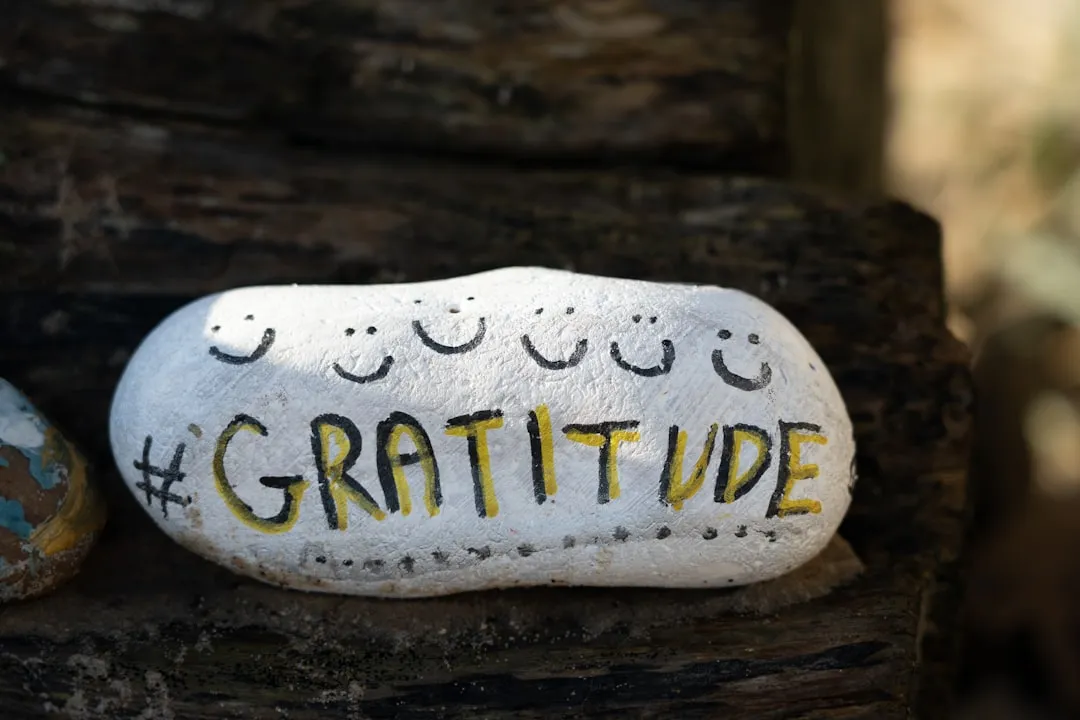
You've likely been told throughout your life that discipline is the cornerstone of achievement. "Grit," "willpower," and "self-control" are lauded as non-negotiable traits for success. While discipline undeniably plays a role in reaching goals, relying on it exclusively can be a grueling and ultimately unsustainable endeavor. This article explores why integrating gratitude into your approach not only complements discipline but often surpasses it in efficacy, fostering a more robust and fulfilling path to personal and professional development.
Your brain is a remarkably adaptable organ, but it operates differently under various conditions. When you approach challenges with a purely disciplinary mindset, particularly if it's laden with self-criticism or pressure, you can inadvertently activate a "threat" state. This state, often associated with the sympathetic nervous system, prepares you for fight, flight, or freeze. While useful for immediate dangers, it severely limits your capacity for sustained learning and creative problem-solving.
The Limiting Scope of Threat-State Cognition
In a threat state, your cognitive resources are primarily allocated to survival. This means that complex tasks, innovative thinking, and adaptive learning are often shunted aside. Imagine trying to learn a new language while constantly being chased by a predator; your brain would prioritize escape over conjugation. Similarly, when you impose strict discipline without an underlying sense of appreciation, your brain may interpret this as a form of internal threat, hindering optimal performance.
Gratitude as a Neural Transformer
Conversely, gratitude acts as a powerful catalyst for shifting your brain into a "growth" state. When you actively practice gratitude, you engage neural circuits associated with reward, positive emotion, and social connection. This neurological shift is not merely a feeling; it's a fundamental alteration in brain chemistry and activity. Research indicates that this move to a growth state is crucial for effective learning and development. It's like moving from a dimly lit, narrow corridor into a brightly illuminated, expansive library. The resources available to you become significantly greater and more accessible.
Cognitive Efficiency: Freeing Up Mental Bandwidth
You have a finite amount of mental energy, often referred to as cognitive bandwidth. Think of it as the RAM in your computer. The more applications running in the background, the slower your primary tasks become. Similarly, if your mind is perpetually occupied with worry, resentment, or social comparison, a significant portion of your cognitive resources is consumed by these unproductive mental processes.
The Drag of Negative Mental States
Worrying about potential failures, resenting past injustices, or constantly comparing yourself to others are mental heavyweights. They act like lead weights on your cognitive processor, slowing down your ability to focus, learn, and perform. Consider a student preparing for an exam while simultaneously fretting about their performance, feeling resentful towards a demanding professor, and comparing their progress to a high-achieving classmate. Their actual learning capacity is severely diminished by these cognitive overheads.
Gratitude as a Cognitive Defragmenter
Gratitude, in contrast, functions as a powerful mental defragmenter. By consciously acknowledging and appreciating positive aspects of your life, you effectively reduce the cognitive load imposed by negative thought patterns. This frees up invaluable mental bandwidth, redirecting it toward productive activities such learning, problem-solving, and creative endeavors. When you are grateful, your mind is less cluttered, allowing for clearer thinking and more efficient processing of information. This isn't wishful thinking; it's a measurable reduction in mental drag, akin to closing resource-intensive background applications on your computer.
Broadening Horizons: The "Broaden-and-Build" Effect
Discipline, when employed in isolation, can sometimes lead to a narrowed perspective. When you are singularly focused on a goal and employing sheer willpower, you might overlook alternative solutions or become rigid in your approach. This can be likened to staring intently at a single brick in a wall, missing the overall structure and potential pathways around it.
The Tunnel Vision of Pure Discipline
Imagine an athlete who is solely focused on the grueling discipline of their training regimen. While dedication is admirable, an exclusive focus on the grind can lead to tunnel vision. They might miss opportunities for cross-training, alternative recovery methods, or even a more enjoyable way to achieve their fitness goals. When faced with setbacks, this narrowed perspective can lead to increased frustration and a higher likelihood of giving up because their mental framework is too rigid to adapt.
Gratitude as an Expansive Lens
Grateful individuals, however, exhibit what psychologists call the "broaden-and-build" effect. This theory posits that positive emotions, including gratitude, broaden your thought-action repertoire, allowing you to see more options, possibilities, and solutions. Instead of fixating on a single path, gratitude encourages a more expansive view, revealing hidden opportunities and alternative routes to success. It's like zooming out from that single brick to see the entire wall, the building, and the surrounding landscape. This broader perspective not only enhances problem-solving but also makes you more resilient in the face of obstacles, as you are more likely to identify alternative strategies rather than becoming bogged down by a single perceived failure.
Mental Well-being: Beyond Stress and Burnout
The relentless pursuit of goals through discipline alone can often come with a significant cost: your mental health. The pressure to constantly perform, coupled with self-criticism inherent in many purely disciplinary approaches, can elevate stress levels and lead to burnout.
The Toll of Unmitigated Discipline
Consider a professional who works tirelessly, driven solely by the expectation of achievement. While they might attain their goals, the constant pressure and lack of appreciation for their efforts or the process itself can lead to chronic stress, anxiety, and eventually, burnout. This isn't merely anecdotal; research suggests that discipline-driven approaches without a balancing element can indeed increase stress and lead to emotional exhaustion. It's like constantly running an engine at maximum RPM without regular tune-ups or appreciation for its performance; eventually, it will break down.
Gratitude as a Mental Health Buffer
Gratitude acts as a powerful buffer against these negative mental health outcomes. Studies have shown that consistent gratitude practices can significantly reduce symptoms of depression and anxiety, with some research indicating a reduction of up to 35%. Furthermore, gratitude has been linked to improved sleep quality, a vital component of mental and physical restoration. By consciously acknowledging positive aspects and experiences, you interrupt cycles of negative rumination, fostering a more positive emotional landscape. This isn't just about feeling good; it's about building a robust mental defense system that protects you from the corrosive effects of stress and prevents burnout, allowing for sustained high performance.
Resilience and Recovery: Bouncing Back Stronger
Failure is an inevitable part of any significant endeavor. The difference between those who succeed and those who falter often lies in their ability to recover and learn from setbacks. While discipline helps in maintaining effort despite challenges, gratitude plays a critical role in expediting the recovery process and building resilience.
The Fragility of Discipline Sans Gratitude
When operating solely on discipline, a significant setback can feel like a devastating blow. The individual may internalize failure as a personal failing, leading to decreased motivation and a heightened sense of defeat. Without the perspective offered by gratitude, a stumble can easily become a full stop, as the mental energy required to push through the negative emotions is overwhelming. It’s like a spring that, once compressed, lacks the internal force to fully rebound.
Gratitude as a Resilient Spring
Grateful individuals, however, exhibit a remarkable capacity for bouncing back from failures more quickly. By acknowledging what went right, what was learned, and the support they received even in times of difficulty, they reframe setbacks as opportunities for growth rather than insurmountable obstacles. This perspective fosters a sense of optimism and agency, empowering them to adapt and try again. Gratitude acts as a powerful internal spring, allowing you to absorb the shock of failure and propel yourself forward with renewed vigor and wisdom. You learn from the fall, appreciate the experience, and rise with a stronger resolve.
Holistic Achievement: The Power of Backward and Forward Focus
Many disciplinary approaches are inherently forward-looking, constantly fixated on future goals and what needs to be accomplished. While this is important, an exclusive forward gaze can lead to a feeling of perpetual inadequacy, as the goalposts always seem to be shifting further away.
The Endless Horizon of Future-Only Focus
Imagine perpetually climbing a mountain, always looking at the summit in the distance. While the aspiration is commendable, if you never pause to appreciate the ground you've covered, the views you've witnessed, or the strength you've developed, the climb can become an exhausting, unrewarding slog. This constant orientation towards what is yet to be achieved, without acknowledging past successes, can breed dissatisfaction and a sense of never being "enough."
Gratitude's Dual Perspective: Backward Gaze, Forward Momentum
Research demonstrates that individuals who combine gratitude for past accomplishments with forward-looking goals achieve more sustained success while maintaining superior mental health. This dual perspective is crucial. By acknowledging and appreciating your past efforts, progress, and achievements, you build a reservoir of self-efficacy and positive reinforcement. This backward gaze provides a strong foundation from which to launch into future endeavors. It's like pausing on your mountain climb to survey the breathtaking landscape you've already traversed, giving you renewed energy and perspective for the ascent ahead. This combination creates a virtuous cycle: past gratitude fuels present motivation, leading to future successes, which in turn generate more gratitude.
Enhanced Performance: School, Work, and Beyond
The benefits of gratitude extend directly into your academic and professional life, yielding concrete improvements in performance and engagement. While discipline can certainly drive initial effort, gratitude fosters a more sustainable and productive environment.
The Limitations of Willpower at Work and School
Consider a student or employee who is driven purely by willpower to meet deadlines and expectations. They might put in the hours, but under the surface, they could be experiencing high levels of stress, boredom, or a lack of genuine interest. This reliance on brute-force discipline often leads to lower quality work, decreased engagement, and ultimately, a higher risk of burnout or attrition. Performance driven solely by willpower is often brittle, prone to cracking under pressure.
Gratitude as an Performance Enhancer
Students and employees who practice gratitude tend to show improved performance and engagement, not through sheer willpower, but through reduced stress and improved well-being. When you appreciate your work, your colleagues, the learning opportunities, or the resources available to you, your intrinsic motivation increases. This shift from extrinsic discipline to intrinsic appreciation leads to higher quality output, greater creativity, and a more positive work or academic experience. It's not just about doing the task; it's about doing it with a sense of purpose and enjoyment, which inherently elevates performance.
Rewiring Your Brain: Building Resilience Against Modern Challenges
Perhaps one of the most profound effects of gratitude is its ability to literally change your brain. This isn't a metaphorical statement; gratitude practices rewire neural pathways, making you more resilient to common challenges like impostor syndrome and burnout, which are often exacerbated by discipline-only approaches.
The Impostor Syndrome Trap of Pure Discipline
When you push yourself relentlessly through discipline without acknowledging your strengths or appreciating your journey, you can inadvertently feed impostor syndrome. This feeling of being a fraud, despite evidence of competence, often arises from an inability to internalize success, constantly attributing achievements to luck or external factors rather than your own capabilities. Discipline alone doesn't build the internal foundation of self-worth necessary to combat this debilitating phenomenon.
Gratitude as a Neural Architect
Gratitude actively changes brain chemistry and wiring. By regularly engaging in gratitude, you strengthen neural pathways associated with positive emotions, self-worth, and resilience. This rewiring makes you inherently more resistant to impostor syndrome because you are systematically acknowledging your capabilities and contributions. Furthermore, by fostering a more positive internal landscape, gratitude builds a robust defense against burnout, an affliction often characterized by emotional exhaustion and a sense of reduced accomplishment. It's like consciously installing anti-virus and firewall software into your mental operating system, protecting you from internal threats and allowing for sustained, healthy performance. This neurological transformation is a powerful testament to why gratitude is not just a pleasant emotion but a vital cognitive tool for long-term well-being and achievement.
FAQs
What is the main difference between gratitude and discipline?
Gratitude involves recognizing and appreciating the positive aspects of life, while discipline refers to self-control and adherence to rules or routines. Gratitude focuses on mindset and emotional well-being, whereas discipline emphasizes behavior and consistency.
How does gratitude improve mental health compared to discipline?
Gratitude has been shown to increase feelings of happiness, reduce stress, and improve overall emotional resilience. While discipline helps maintain habits, gratitude fosters a positive outlook that can enhance motivation and reduce burnout.
Can gratitude and discipline be used together effectively?
Yes, combining gratitude with discipline can create a balanced approach. Discipline helps establish productive habits, while gratitude sustains motivation and emotional well-being, making it easier to maintain those habits over time.
Why might gratitude be more effective than discipline alone in achieving goals?
Gratitude encourages a positive mindset and reinforces intrinsic motivation, which can lead to greater persistence and satisfaction. Discipline alone may lead to rigidity and burnout, whereas gratitude helps maintain enthusiasm and emotional balance.
Are there scientific studies supporting the benefits of gratitude over discipline?
Yes, numerous psychological studies have demonstrated that practicing gratitude can improve mental health, increase life satisfaction, and enhance motivation. While discipline is important for goal achievement, gratitude contributes significantly to sustained well-being and success.