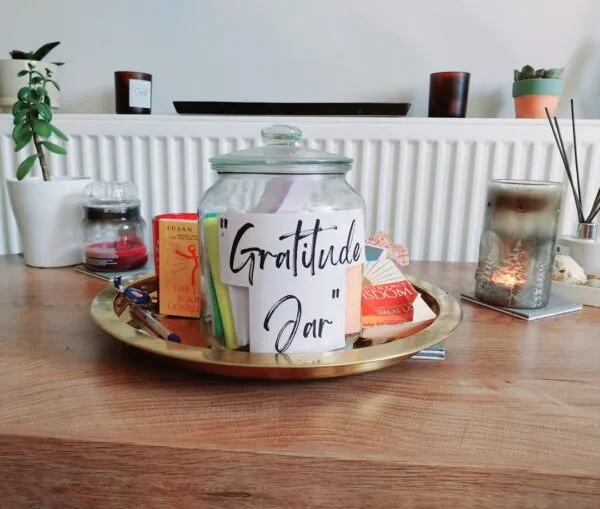
You might have noticed it, a quiet hum beneath the more boisterous pronouncements of creative ambition. It's the recurring melody of gratitude, a theme that writers, in their endless pursuit of narrative and meaning, seem to return to with a persistent, almost ritualistic frequency. It's not merely a fleeting sentiment, a polite nod to good fortune, but a foundational element, a wellspring from which resilience, perspective, and even inspiration are drawn.
The Forge of Appreciation: Where Resilience is Tempered
When you face the blank page, that vast, often intimidating expanse, you understand the inherent vulnerability of the creative act. Each word you commit is an offering, exposed to critique, to indifference, or to the harsh glare of your own self-doubt. In such an environment, gratitude doesn't just soften the edges; it actively fortifies your resolve. It becomes a shield against the inevitable rejections, the lukewarm reviews, the periods of creative drought.
Gratitude as a Dam Against the Tide of Rejection
Rejection, for a writer, is not an anomaly; it is a constant companion. It can manifest as a curt email, a silent inbox, or worse, a dismissive critique. Without a cultivated sense of gratitude, these moments can feel like personal indictments, enough to make you question your entire endeavor. However, when you approach your work with gratitude, you begin to reframe these experiences.
- The Editor's "No" as a Stepping Stone: Instead of viewing a rejection as a definitive end, you can perceive it as a redirection. Gratitude allows you to appreciate the time and consideration an editor or publisher extended, even if the outcome was not what you desired. This perspective shift transforms a potential roadblock into a detour, a chance to refine your approach or target a different avenue. The experience, however unpleasant, has offered you implicit feedback, a signal that perhaps another story, another angle, awaits your attention. You can be grateful for the clarity, even if it stings.
- Learning from Every Encounter: Every interaction, whether positive or negative, holds a kernel of learning. Gratitude encourages you to be present in these moments and to extract the lessons, rather than dwelling on the emotional fallout. You can be thankful for the sharp honesty of a critique, recognizing that it offers a more valuable path forward than polite insincerity. This is not about self-flagellation; it is about a mature understanding that growth often necessitates discomfort, and gratitude helps you endure that discomfort with equanimity.
- Recognizing the Journey Itself: The very act of being able to write, to engage with language, to shape narratives – this is a privilege. Gratitude allows you to step back from the immediate transactional outcome (publication, acclaim) and appreciate the intrinsic value of the process. You can be thankful for the hours spent immersed in your craft, for the discoveries made along the way, and for the simple fact that you have a voice and the means to express it. This intrinsic appreciation acts as an internal ballast, keeping you steady when external validation falters.
The Enduring Power of Shared Experience
The writing life can be solitary. You spend countless hours communing with characters and concepts that exist only within your mind. Yet, the act of writing is also deeply social, connecting you to a vast continuum of human thought and emotion. Gratitude plays a vital role in fostering and maintaining these connections.
- Appreciating the Mentors and Guides: Many writers owe a significant debt to those who came before them, to the authors whose words sparked their own imagination, and to the mentors who offered guidance and encouragement. Gratitude allows you to acknowledge and honor these influences, not as figures to be passively admired, but as active contributors to your own creative lineage. You can be thankful for their courage in sharing their stories, which in turn emboldens you to share yours.
- The Camaraderie of the Writing Community: While often competitive, the writing world also fosters pockets of genuine camaraderie. You find fellow travelers who understand the unique struggles and triumphs. Gratitude helps you cherish these relationships, recognizing the support and solidarity they provide. A shared sense of struggle, viewed through the lens of gratitude, can transform into a powerful shared resilience. You are not alone in your battles; you are part of a collective effort, and that is something to be thankful for.
- Connecting with Your Audience: Even before a single word is published, you are, in essence, writing for an audience, even if it's just your future self. Once your work is out in the world, you connect with readers whose lives are touched by your stories. Gratitude allows you to appreciate these connections, to understand that your words have the potential to resonate beyond your own experience. This awareness can infuse your writing with a deeper sense of purpose and responsibility. You are not simply creating for yourself; you are contributing to a larger conversation, and that is a profoundly humbling and gratitude-inducing realization.
A Sanctuary Amidst the Noise: The Solace of Internal Recognition
In a world saturated with stimuli, where constant communication and immediate feedback are the norm, writers often seek refuge in moments of quiet introspection. Gratitude provides precisely this sanctuary, allowing for a recalibration of perspective and a grounding in the present moment.
Gratitude as a Counterpoint to External Validation
The drive for external validation – from publishers, critics, and readers – can be a powerful motivator for writers. However, an overreliance on this external source can lead to anxiety and a fragile sense of self-worth. Gratitude offers an antidote by cultivating an internal locus of contentment.
- Finding Value Beyond the Best-Seller List: The metrics of success in the literary world can be fickle and often elusive. Gratitude shifts your focus from external markers of achievement to the intrinsic rewards of the creative process. You can be thankful for the satisfaction derived from crafting a perfect sentence, for the thrill of bringing a complex character to life, or for the intellectual rigor involved in wrestling with an intricate plot. These are pleasures that no external survey can quantify.
- The Quiet Affirmation of Self-Worth: As the Post-Journal op-ed from January 2026 suggests, a conscious effort to cultivate gratitude can lead to a deeper appreciation of oneself and one's capabilities. [3] When you consistently acknowledge the positive aspects of your writing journey, you build a reservoir of self-worth that is less dependent on the opinions of others. You can be grateful for your persistence, for your unique voice, and for the courage to continue creating, regardless of external acclaim. This internal affirmation is a precious commodity in the often-precarious world of writing.
- Embracing Imperfection: The pursuit of perfection is a common aspiration for writers, but it can also be a source of immense frustration. Gratitude allows you to embrace imperfection as a natural and even valuable part of the creative process. You can be thankful for the drafts that are not quite right, for the characters who stubbornly refuse to behave as planned, for the sentences that require multiple revisions. These imperfections are not failures; they are opportunities for growth and discovery. As Maya Angelou suggests, each day can be seen as new, an opportunity to learn and improve, and gratitude helps you accept this ongoing process. [3]
The Power of Presence: Anchoring in the Now
The writer's mind is a constant thrum of ideas, memories, and future possibilities. This imaginative fluidity is essential for creativity, but it can also lead to a dispersal of attention. Gratitude acts as an anchor, grounding you in the present moment and allowing for a more focused engagement with your work and your life.
- Savoring the Small Victories: Amidst the grand ambitions of writing, it is easy to overlook the smaller triumphs. Gratitude encourages you to pause and acknowledge these moments: finishing a difficult chapter, receiving a positive comment from a beta reader, or simply having the uninterrupted time to write. These seemingly minor victories, when acknowledged with gratitude, accumulate into a significant source of encouragement and motivation. They are the small pebbles that pave the path forward.
- Appreciating the Creative Process Itself: The January 2026 op-ed in the Post-Journal highlights the importance of appreciating silence and hope alongside patience. [3] Gratitude for the quiet hours spent at your desk, for the contemplative spaces that allow your ideas to germinate, is crucial. It's about recognizing that the often-invisible labor of writing – the thinking, the planning, the agonizing over word choice – is as vital as the final output. You can be thankful for the brain's capacity to imagine, to connect disparate ideas, and to find patterns where none were apparent before.
- Finding Joy in the Mundane: The act of writing can sometimes take you to extraordinary worlds and experiences. However, the foundation of that creativity often rests on the seemingly mundane aspects of daily life. Gratitude allows you to find richness in these ordinary moments, which can then fuel your narratives. You can be thankful for the specific texture of your keyboard, the particular slant of light in your writing space, the comforting aroma of your coffee. These sensory details, steeped in gratitude, can become potent ingredients in your creative arsenal.
The Alchemy of Perspective: Transforming Challenges into Stories
Writers are often drawn to the complexities and struggles of the human experience. Gratitude, rather than negating these darker aspects, provides a framework for understanding and transforming them into compelling narratives.
Gratitude as a Lens for Empathy
To write effectively about the human condition, you must cultivate empathy, the ability to understand and share the feelings of others. Gratitude can deepen this capacity by fostering an appreciation for the shared vulnerability and resilience of humanity.
- Understanding the Human Struggle: When you are grateful for your own capacity to overcome challenges, you are better equipped to understand and portray the struggles of others. You recognize that adversity is a universal experience, and that within it lies the potential for growth and transformation. Gratitude allows you to approach characters who are suffering not with pity, but with a profound respect for their resilience.
- Finding Humanity in Dissent: Even in moments of disagreement or conflict, gratitude can help you find common ground. You can be thankful for the opportunity to engage with different perspectives, even if they challenge your own. This ability to find a sliver of appreciation in disagreement allows you to create nuanced characters and explore complex societal issues with greater depth and understanding. You are not simply writing about heroes and villains, but about individuals with motivations, flaws, and a shared humanity.
- The Generosity of the Human Spirit: Gratitude often leads to a recognition of the kindness and generosity that exists in the world, even in its darkest corners. This awareness can infuse your writing with a sense of hope and optimism, reminding readers of the enduring strength of the human spirit. You can be thankful for the acts of altruism, the moments of compassion, and the quiet heroism that often go unnoticed. These are the stories that can truly uplift and inspire.
The Transformative Power of Reflection
The act of writing itself is a form of reflection. Gratitude enhances this process by providing a framework for making meaning from experience, both personal and observed.
- Turning Scars into Stories: The hardships you have faced, the mistakes you have made, the losses you have endured – these can be fertile ground for compelling narratives. Gratitude allows you to look back on these experiences not with bitterness or regret, but with an understanding of the lessons learned and the strength gained. You can be grateful for the very experiences that have shaped you, recognizing that they have provided you with unique insights and a richer understanding of life.
- The Legacy of Gratitude in Memoir: As the general reading habits and memoir perseverance found in search results indicate, personal narratives that explore hardship and subsequent gratitude often resonate deeply with readers.[1][2][4] Writers returning to gratitude in their memoirs are not simply recounting events; they are demonstrating a profound process of internal growth and meaning-making. They offer readers a roadmap for navigating their own challenges, showing that even in the face of adversity, it is possible to find points of gratitude and to emerge stronger.
- Finding Purpose in the Narrative: Gratitude helps writers to identify the underlying purpose of their stories. It moves beyond simply recounting events to exploring the "why" behind them. You can be grateful for the questions that arise from your experiences, and for the opportunity to explore them through writing. This purposeful engagement with your subject matter lends your work a depth and resonance that can connect with readers on a profound level.
The Engine of Inspiration: Fueling Creativity Through Appreciation
While it might seem counterintuitive, the practice of gratitude doesn't stifle creativity; it acts as a powerful catalyst. By appreciating what you already have and the opportunities that are available, you open yourself up to new possibilities.
Gratitude as a Source of Novelty
The fear of running out of ideas is a persistent anxiety for many writers. Gratitude offers a way to reframe this fear by fostering an appreciation for the abundance of inspiration that surrounds you.
- Seeing the Extraordinary in the Ordinary: The January 2026 op-ed emphasizes appreciating silence and hope, alongside the daily clutter of life. [3] Gratitude allows you to look at the familiar with fresh eyes, to find the extraordinary within the ordinary. The mundane details of daily life, when viewed with a grateful heart, can become the seeds of captivating stories. You can be thankful for the quiet observation of a stranger, the intricate patterns of nature, or the simple act of human connection. These are the raw materials of imagination.
- The Generative Power of Curiosity Fueled by Gratitude: When you are grateful for the capacity to learn and explore, your curiosity is amplified. You become more open to new experiences, new ideas, and new perspectives. This heightened curiosity is the engine that drives creative exploration. You can be thankful for the innate human drive to understand, to question, and to discover, recognizing that this drive is a constant source of potential inspiration.
- The Joy of Discovery: The process of writing is often a journey of discovery, where you uncover new insights and meanings as you go. Gratitude enhances this joy by allowing you to appreciate each new revelation, no matter how small. You can be thankful for the moments of "aha!" when a plot point clicks into place or a character's motivation becomes clear. This appreciation fosters a positive feedback loop, encouraging further exploration and deeper engagement with your work.
Gratitude's Role in Sustained Effort
The commitment required for writing is substantial. Gratitude provides the emotional and mental fortitude to sustain this effort over the long haul.
- The Marathon, Not the Sprint: Writing is rarely a sprint to the finish line; it is a marathon that requires endurance and perseverance. Gratitude offers a renewable source of energy, helping you to maintain momentum when motivation wanes. You can be thankful for your own dedication, for the passion that drives you, and for the belief in the value of your work, even when the path ahead seems daunting.
- Embracing the "New Day" Mentality: Inspired by Maya Angelou's view of each day as new, writers can use gratitude to approach each writing session as a fresh opportunity. [3] Instead of being bogged down by yesterday's struggles or tomorrow's uncertainties, you can focus on the present moment with a thankful heart. This allows for renewed energy and a more optimistic outlook on your progress. You are not defined by past setbacks, but by your present commitment to creation.
- The Cultivation of Hope: As the Post-Journal op-ed notes, hope is a crucial element to cultivate alongside gratitude. [3] Gratitude for the progress you have made, for the support you have received, and for the potential that lies ahead, fosters a sense of enduring hope. This hope is not a passive wish but an active belief in the possibility of future success and fulfillment. It is the fuel that keeps the creative engine running, even in the face of uncertainty.
The Enduring Legacy: Weaving Gratitude into the Fabric of Writing
Ultimately, writers return to gratitude again and again because it is not merely a stylistic choice or a fleeting emotion. It is a fundamental aspect of how they engage with their craft, with themselves, and with the world. It is a tool for resilience, a source of perspective, a wellspring of inspiration, and a means of building connection.
Gratitude as a Conscious Practice
The conscious incorporation of gratitude into your writing life is not a passive happenstance; it is an active cultivation. It is the deliberate act of noticing, acknowledging, and appreciating the elements that contribute to your creative journey.
- The Nightly Act of Thanks: The January 2026 op-ed concludes with an emphasis on ending the day with nightly thanks. [3] This practice, if adopted by writers, can be a powerful way to consolidate lessons learned, acknowledge accomplishments, and set a positive tone for the following day. You can reflect on the words you wrote, the challenges you overcame, and the moments of insight you experienced, and offer a silent or spoken acknowledgment of their value.
- Integrating Gratitude into the Creative Workflow: Gratitude can be woven into the very fabric of your writing process. Before you begin writing, take a moment to appreciate the opportunity. During your writing session, pause to acknowledge moments of flow or inspiration. After you finish, reflect on your progress with thankfulness. This consistent integration transforms gratitude from an occasional sentiment into a foundational practice.
- The Intergenerational Exchange of Gratitude: As you gain experience and wisdom, you have the opportunity to pay forward the gratitude you have received. By mentoring emerging writers, sharing your knowledge, and fostering a supportive environment, you contribute to the ongoing legacy of appreciation within the literary world. This act of giving back is, in itself, an expression of gratitude for those who have paved the way for you.
The Ripple Effect of a Grateful Author
The impact of a writer who consistently engages with gratitude extends beyond their personal creative output. It can influence readers, fellow writers, and the broader cultural landscape.
- Inspiring Readers to Find Their Own Gratitude: When you write with an authentic sense of gratitude, that sentiment can resonate with your readers, encouraging them to look for similar points of appreciation in their own lives. Your stories can become a mirror, reflecting not only the challenges of existence but also the enduring possibility of finding contentment and meaning.
- Fostering a More Supportive Creative Ecosystem: A community of writers who practice gratitude is likely to be more collegial and supportive. The shared appreciation for the creative journey can mitigate feelings of intense competition and foster collaboration and mutual encouragement. This creates a healthier and more sustainable environment for creative endeavors.
- A Lasting Contribution to Literature: The works of writers who have infused their narratives with gratitude often possess a timeless quality. They speak to the enduring human need for meaning, connection, and a sense of enduring hope. As your own body of work takes shape, the undercurrent of gratitude can become a hallmark of your contribution, a quiet testament to the power of appreciation in shaping not only individual lives but also the collective human narrative. You are not just telling stories; you are offering a perspective that, at its core, celebrates the act of being, in all its imperfect, challenging, and ultimately, grateful glory.
FAQs
What is the main reason writers focus on gratitude?
Writers often focus on gratitude because it helps them maintain a positive mindset, enhances creativity, and fosters emotional resilience, which are essential for sustained writing productivity.
How does practicing gratitude benefit a writer's mental health?
Practicing gratitude can reduce stress, increase feelings of happiness, and improve overall mental well-being, allowing writers to cope better with challenges and setbacks in their work.
Can gratitude influence a writer's creative process?
Yes, gratitude can open a writer's perspective to new ideas and inspiration by encouraging mindfulness and appreciation of everyday experiences, which can enrich their storytelling.
Do successful writers commonly use gratitude as a tool?
Many successful writers incorporate gratitude into their daily routines, such as journaling or reflection, to stay motivated and connected to their purpose and passion for writing.
Is gratitude linked to improved writing productivity?
Gratitude can lead to improved productivity by fostering a positive attitude, reducing negative self-talk, and increasing focus, all of which contribute to more consistent and effective writing sessions.