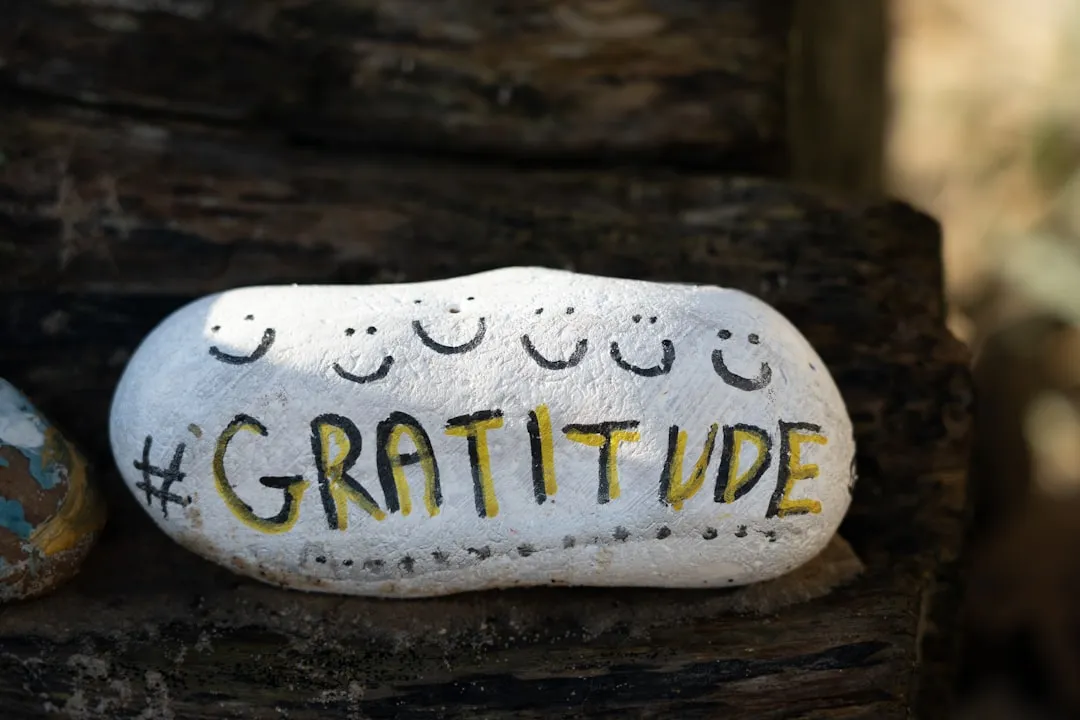
You stand at a crossroads of understanding when contemplating gratitude. Is it a fleeting surge of happiness, a warm gush of emotion that washes over you and then recedes? Or is it something more profound, a bedrock of insight that shapes your perception and interaction with the world? This article will argue for the latter: that gratitude, in its fullest embodiment, transcends mere emotion to become a form of wisdom. You will discover how ancient traditions and contemporary understanding align to reveal gratitude not as a reflexive feeling, but as a cultivated state of being, a strategic approach to existence.
You frequently encounter gratitude described in emotional terms. "I feel grateful," you might say, after receiving a gift or experiencing a pleasant outcome. This emotional facet is undeniable and valuable. It is a pleasant sensation, a positive affect that momentarily elevates your spirits. However, confining gratitude solely to this emotional realm is akin to mistaking a ripple on the surface of a pond for the entire depths of the water.
The Emotional Eddy
You can readily identify the signs of emotional gratitude. It often manifests as a spontaneous reaction to external stimuli. A kind word, a helpful gesture, a favorable circumstance – these trigger a pleasant emotional response. This is the gratitude of immediate satisfaction, a fleeting positive feedback loop. While beneficial for your short-term well-being, it is largely reactive and dependent on external factors. When the external ceases, so too often does the emotion. This type of gratitude, while personally uplifting, rarely translates into a lasting shift in one's overall disposition or worldview. It is a passenger, not the driver, in your journey.
The Wisdom Anchor
In contrast, gratitude as wisdom operates on a fundamentally different level. It is not merely a response to the good, but an active pursuit of it, a deliberate cultivation of a particular lens through which to view your experiences. This perspective involves a fundamental reorientation of your mental landscape. It is the recognition that even in adversity, there are lessons, opportunities, and underlying structures of support. This form of gratitude is not contingent on external events but is an internal state you actively foster. It is the anchor that holds you steadfast amidst the turbulent seas of life, a constant point of reference regardless of the weather.
Gratitude Beyond Reaction: A Practice of Awareness
You might assume that gratitude is simply something that happens to you. However, the wisdom traditions across millennia suggest a different narrative. They posit that gratitude is not a passive receipt of good fortune but an active practice, a discipline you must consistently engage in to cultivate proficiency. Think of it less as a gift you receive and more as a muscle you strengthen.
The Deliberate Cultivation
Consider practices like mindfulness or yoga, which demand regular commitment, sustained attention, and a willingness to engage in repetitive actions to develop skill. Gratitude functions similarly. It is not an innate emotional state that you are born with in full capacity. Instead, it is an awareness practice that requires intentional effort. You must consciously seek out reasons for gratitude, even when they are not immediately apparent. This deliberate effort shifts your focus from what is lacking to what is present, from what is problematic to what is supportive. This is not about denying hardships, but about recognizing the broader context and the underlying resilience you possess.
The Habit of Observation
To practice gratitude as wisdom, you engage in a continuous act of observation. You become attuned to the subtle threads of interconnectedness and support that weave through your daily life. This might involve a morning reflection on simple blessings – the warmth of your bed, the sustenance of your food, the reliability of your senses. It could extend to a conscious appreciation for the complexities of an ecosystem, the intricacies of human collaboration, or the sheer miracle of your own existence. This sustained observation transforms gratitude from an occasional flicker into a steady internal light, illuminating aspects of your experience that might otherwise remain in shadow. You are training your internal radar to detect not just threats, but also gifts.
The Architectonics of Perspective: Shifting Your Internal Landscape
You have the remarkable capacity to shape your internal world, to choose the lens through which you perceive reality. Gratitude, when understood as wisdom, becomes a powerful tool in this architectural endeavor. It is a touchstone that helps you recognize opportunity and build resilience, particularly during your most challenging moments.
Reconnoitering for Opportunity
When confronted with difficulty, your natural inclination might be to focus on the problem, to dwell on the negative. This is understandable, as survival mechanisms often prioritize threat detection. However, gratitude, as a wisdom practice, invites you to expand your reconnaissance. It prompts you to look beyond the immediate obstacle and to actively search for the hidden opportunities, the lessons embedded within the struggle. A setback might reveal a flaw in your approach, prompting a more effective strategy. A loss might create space for new growth or lead you to unexpected connections. This is not about naive optimism, but about a pragmatic understanding that even fertile ground for growth often emerges from initially barren landscapes.
Forging Resilience through Appreciation
Resilience is not merely the ability to bounce back from adversity; it is the capacity to adapt, learn, and even flourish in its wake. Gratitude plays a central role in forging this resilience. By intentionally focusing on what you possess, what has gone right, and the underlying support systems in your life, you are actively counteracting the corrosive effects of negativity and despair. You are recognizing your internal resources and external allies. This consistent acknowledgment of positive elements, even amidst hardship, reinforces your mental fortitude and strengthens your resolve. It's like building an immune system for your psyche, making you more robust against the inevitable pathogens of life.
Stoicism and the Fortification of the Mind
You will find a particularly compelling articulation of gratitude as wisdom within the rigorous framework of Stoic philosophy. Far from being a philosophy of emotional suppression, Stoicism champions the development of mental fortitude and strength, and gratitude stands as a cornerstone of this endeavor.
The Stoic Discipline of Perspective
Stoicism teaches you to distinguish between what is within your control and what is not. Your judgments, your choices, your attitudes – these are within your control. External events, the actions of others, even your physical health – these are largely beyond it. Gratitude, within this framework, becomes a deliberate exercise in focusing your attention on the good that is within your purview, or at least on the good that can be extracted from circumstances, regardless of their nature. You might not control the rain, but you can be grateful for the fertile soil it creates. This active choice to interpret events in a grateful light fortifies your mind against external vicissitudes.
Discerning the Gift in Every Experience
The Stoics, notably figures such as Seneca and Marcus Aurelius, would encourage you to view every experience, even the ostensibly negative ones, as a potential source of learning or an opportunity to practice virtue. A challenging person becomes an occasion to practice patience. A disappointment becomes a test of your equanimity. To find gratitude in such situations is not to deny their difficulty, but to acknowledge their potential as catalysts for your personal growth. You are not celebrating the hardship itself, but the strength and wisdom you gain from navigating it. This consistent search for underlying positives transforms trials into training grounds for your character.
Gratitude as an Advanced Spiritual Lesson
You might not immediately consider gratitude to be an "advanced spiritual lesson." Often, spiritual journeys are associated with grand revelations or intricate meditations. However, esoteric philosophies often frame the ability to choose between ambition and thankfulness as a profoundly sophisticated aspect of spiritual development.
The Lure of Ambition
Ambition, in its unbridled form, often fixates on future states – what you lack, what you must achieve, what is yet to be realized. While a degree of healthy ambition can be a powerful motivator for progress, unchecked ambition can lead to perpetual dissatisfaction, a constant feeling of striving and a neglect of the present moment. You become a runner perpetually looking at the finish line, forgetting the beauty of the landscape you traverse. This state of constant wanting can eclipse any capacity for genuine gratitude.
The Liberation of Thankfulness
Thankfulness, in this spiritual context, offers a profound liberation from the endless cycle of desiring. It is the conscious choice to acknowledge and appreciate what is, rather than being consumed by what is not. This is not a call for passivity or a renunciation of all goals, but rather an invitation to cultivate a state of contentment that coexists with aspirations. It allows you to pursue your ambitions with a sense of groundedness, free from the gnawing hunger of perpetual dissatisfaction. When you choose thankfulness, you are choosing presence over future projection, abundance over scarcity, and inner peace over external validation. This choice represents a maturation of your spiritual journey, a movement towards a more holistic and integrated understanding of well-being. You are not simply feeling grateful; you are being grateful, embodying a profound appreciation for existence itself. This is the ultimate expression of gratitude as wisdom.
FAQs
What is the main idea behind viewing gratitude as wisdom rather than just an emotion?
Gratitude as wisdom emphasizes understanding and appreciating the deeper reasons and benefits behind feeling thankful, rather than simply experiencing it as a fleeting emotional response. It involves recognizing the value of gratitude in fostering personal growth, resilience, and meaningful relationships.
How does gratitude as wisdom differ from gratitude as an emotion?
Gratitude as an emotion is a spontaneous feeling of thankfulness, often triggered by specific events. In contrast, gratitude as wisdom is a deliberate and reflective practice that involves a conscious awareness of the interconnectedness of life and the ongoing appreciation of positive aspects, even in challenging situations.
Can practicing gratitude as wisdom improve mental health?
Yes, practicing gratitude as wisdom can enhance mental health by promoting a positive outlook, reducing stress, and increasing emotional resilience. It encourages individuals to focus on what they have and the lessons learned, which can lead to greater life satisfaction and well-being.
Is gratitude as wisdom linked to any philosophical or spiritual traditions?
Many philosophical and spiritual traditions, such as Stoicism, Buddhism, and various religious teachings, emphasize gratitude as a form of wisdom. These traditions view gratitude as a key to understanding life’s impermanence, fostering humility, and cultivating compassion.
How can someone cultivate gratitude as wisdom in their daily life?
To cultivate gratitude as wisdom, individuals can practice mindfulness, reflect regularly on things they are thankful for, learn from life’s challenges, and consciously acknowledge the contributions of others. Journaling, meditation, and expressing appreciation can also help deepen this understanding.