You are about to explore the mechanisms by which gratitude, a seemingly simple cognitive exercise, translates into significant biological and psychological advantages with minimal overhead. This article will delineate the neural underpinnings, physiological effects, and behavioral outcomes associated with cultivating a grateful mindset, framing it as an efficient neuro-cognitive habit.
You might perceive gratitude as a soft skill, perhaps even an optional embellishment to your daily routine. However, from a neuroscientific perspective, it is a potent activator of key brain regions responsible for executive function and emotional regulation. Consider your brain not as a monolithic entity, but as a complex network of highways and intersections. Sustained gratitude practice acts as a conscious rerouting of traffic, prioritizing beneficial neural pathways.
Activating the Medial Prefrontal Cortex
One of the most compelling insights into the neural mechanisms of gratitude involves the medial prefrontal cortex (mPFC). This region, situated at the front of your brain, is a central hub for self-referential processing, emotional regulation, and decision-making. When you engage in gratitude exercises, such as consciously listing things you are thankful for, you are actively stimulating this area. Recent studies, such as those by Kini et al. (2016), have demonstrated that gratitude practice reliably activates the mPFC. What is particularly noteworthy is the lasting impact: sustained neural sensitivity in this region has been observed up to three months post-intervention. This suggests that gratitude is not merely a transient mood booster but a habit capable of inducing long-term neurological remodeling. You are, in essence, sculpting your brain to become more adept at processing and regulating emotions, making more considered decisions, and integrating positive self-perception with your experiences. This is not unlike a regular workout regime building muscle memory; the initial effort trains the system, and the benefits accrue over time, making subsequent efforts more efficient and effective.
Strengthening Executive Function
The mPFC’s role extends beyond emotional processing; it is integral to executive functions such as planning, working memory, and inhibition. By improving its functionality through gratitude, you are implicitly enhancing these cognitive capacities. You might find yourself making more thoughtful choices, being less impulsive, and better equipped to manage complex tasks. This is not a direct consequence in the sense of a specific gratitude exercise directly improving your ability to solve a quadratic equation, but rather a holistic improvement in the underlying neural infrastructure that supports such higher-order thinking. Think of it as upgrading the operating system of your brain; while individual applications might remain the same, the overall performance and efficiency are markedly improved.
Hacking Your Brain's Reward System
Your brain is hardwired for reward. Dopamine, often dubbed the "feel-good" neurotransmitter, plays a crucial role in motivation, pleasure, and reinforcement. Gratitude practices, it turns out, are an incredibly efficient way to tap into and leverage this intrinsic reward system. You are not requiring external stimuli or complex achievements to trigger this cascade; the internal act of appreciation is sufficient.
Dopamine Release and the Anterior Cingulate Cortex
When you practice gratitude, your brain doesn't just register the sentiment; it actively responds with a neurochemical release. This involves the release of dopamine, primarily facilitated by activity in the anterior cingulate cortex (ACC) and the hypothalamus. The ACC is a key player in detecting errors, monitoring conflicts, and regulating emotional responses, while the hypothalamus is critical for orchestrating numerous vital functions, including the release of hormones. The sustained activation of these areas during gratitude practice translates into a potent cocktail of neurochemicals that enhance feelings of reward, foster empathy, and contribute to stress relief. You are, in essence, providing your brain with a consistent, self-generated source of positive reinforcement, akin to an internal sprinkler system watering and nourishing the garden of your mind.
Rapid Amygdala Reduction and Anti-Inflammatory Effects
Beyond the direct dopamine surge, gratitude exhibits a profound impact on your body’s stress response. Functional MRI studies have revealed rapid reductions in amygdala activity during gratitude practice. The amygdala, often referred to as your brain's alarm bell, is responsible for processing fear and other negative emotions. By quieting this region, gratitude effectively reduces your physiological state of arousal and anxiety. Furthermore, this neuro-modulatory effect extends to the immune system. Gratitude has been shown to reduce inflammatory markers such as TNF-alpha and IL-6. These cytokines are associated with chronic inflammation, which underlies numerous health conditions, from cardiovascular disease to neurodegenerative disorders. You are, therefore, not just feeling better emotionally, but actively dampening the biochemical pathways that contribute to disease, giving your immune system a tangible advantage. This is like a high-efficiency particulate air (HEPA) filter for your internal environment, reducing contaminants and promoting overall health.
Cultivating a Resilient Personal Operating System
The benefits of gratitude extend beyond immediate neurochemical shifts. They contribute to a more robust and resilient personal operating system, enhancing your overall well-being and equipping you to navigate life's challenges with greater ease. You are not merely addressing symptoms; you are building foundational strengths.
Boosting Optimism and Physical Activity
Gratitude isn't just about feeling good in the moment; it cultivates a more optimistic outlook on life. This positive reframing influences your behavior, including your engagement with physical activity. When you consistently focus on positive aspects, you are more likely to perceive challenges as opportunities and engage in behaviors that promote your health. Studies comparing individuals who regularly journaled about gratitude against those who focused on neutral or negative topics have consistently shown superior outcomes in the gratitude group. This includes a higher likelihood of engaging in physical activity. You are essentially shifting your perceptual lens, making the world appear less threatening and more inviting for constructive engagement. This is analogous to a well-maintained engine that runs smoothly, making it more appealing to take it for a drive.
Enhancing Sleep Quality and Reducing Cortisol
One of the often-underestimated benefits of gratitude is its profound impact on sleep quality. By reducing stress and quieting the amygdala, gratitude helps to create a more favorable internal environment for restful sleep. The lowering of cortisol, the primary stress hormone, is a key mechanism here. Chronic elevated cortisol levels disrupt sleep patterns and contribute to a host of health problems. A 10-week journaling study highlighted that individuals practicing gratitude experienced better sleep outcomes compared to control groups. This suggests that a gratitude practice before bed can act as a mental sedative, facilitating the transition into deeper, more restorative sleep. You are actively disarming the internal stressors that disrupt your sleep, allowing your body and mind to truly recuperate.
The Social Echoes of Gratitude
Humans are inherently social creatures. Our well-being is intricately linked to our connections with others. Gratitude, while often an internal experience, has significant external ramifications, fostering stronger social bonds and promoting pro-social behaviors. You are not just improving your own internal state; you are enriching your shared social fabric.
The Generosity Link and Mesolimbic Reward System
Emerging research, particularly anticipated articles in 2025, highlights a powerful pairing between gratitude and generosity. When you experience gratitude, you are often more inclined to act generously. This reciprocal relationship activates the mesolimbic reward system, the same neural pathway involved in experiencing pleasure from basic needs like food and sex. This suggests that acts of generosity, spurred by gratitude, are intrinsically rewarding. Furthermore, this pairing leads to parasympathetic dominance, a state associated with "rest and digest" rather than "fight or flight." This enhanced parasympathetic activity promotes better digestion and more stable heart rhythms. You are essentially creating a virtuous cycle where positive emotions lead to positive actions, which in turn reinforce positive emotions, creating a self-sustaining loop of well-being. This is like a well-oiled social machine where appreciation acts as the lubricant, making interactions smoother and more rewarding for all.
Enhancing Social Connection and Empathy
Beyond explicit acts of generosity, gratitude subtly yet powerfully enhances your social connections. By focusing on the positive contributions of others, you naturally foster greater empathy and a sense of belonging. Professor Andrew Huberman emphasizes that gratitude enhances calm, social connection, and motivation. When you feel grateful for someone, you are more likely to express appreciation, which strengthens the bond. This improved social connection is not just a pleasant afterthought; it is a fundamental pillar of psychological resilience. Loneliness and social isolation are significant risk factors for various physical and mental health issues. Gratitude, by encouraging positive interpersonal interactions, acts as a powerful antidote. You are effectively building an invisible bridge to others, strengthening the emotional infrastructure of your relationships.
Sustaining the Gratitude Habit: Practical Applications
Given the compelling evidence for gratitude's low-effort, high-impact nature, the question naturally arises: how do you sustainably integrate this habit into your life? It doesn't require complex rituals or significant time investment. Small, consistent efforts yield substantial returns. You are not running a marathon; you are taking purposeful, daily steps.
Diary Hacks for 2026 and Beyond
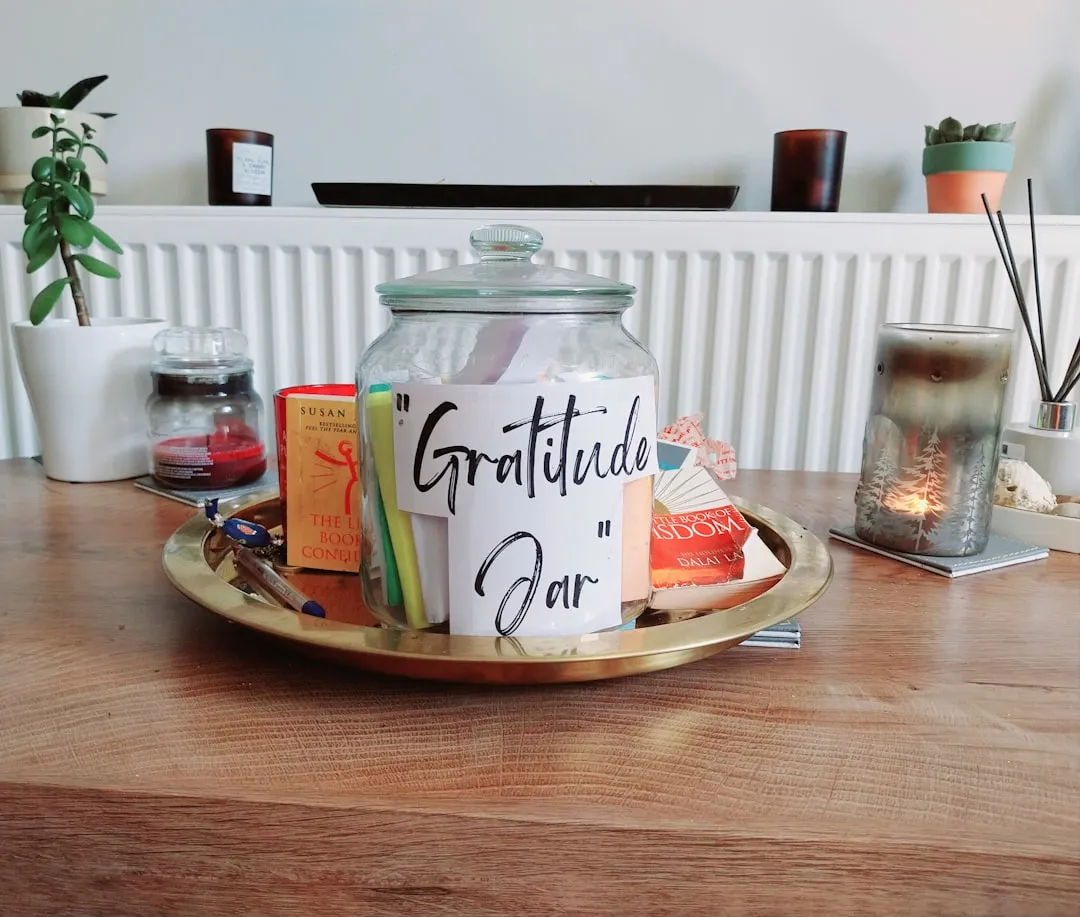
Anticipated "diary hacks" in 2026 point towards simplified, yet effective, methods for integrating gratitude into your daily routine. This could involve brief journaling prompts, mental checklists, or even dedicated apps designed to facilitate gratitude expression. The key is consistency over intensity. Instead of aiming for a lengthy, introspective session every day, consider dedicating just a few minutes, perhaps before bed or upon waking, to recall three things you are genuinely grateful for. It could be as simple as "the hot coffee I just drank," "the comfortable chair I'm sitting in," or "a kind word from a colleague." The specificity and personal resonance of the items you choose amplify the effect. You are building a neural muscle, and like any muscle, it responds best to regular, gentle exercise rather than infrequent, strenuous workouts.
Altering Brain-Heart Functional Connectivity
Huberman's insights underscore the rapid and profound impact of gratitude on your physiological state. He notes that gratitude rapidly alters brain-heart functional connectivity post-practice. This means that the communication between your brain and your heart becomes more coherent and synchronized. A well-regulated heart rate variability, indicative of a healthy autonomic nervous system, is often associated with improved emotional regulation and resilience. By practicing gratitude, you are essentially training your brain and heart to work in greater harmony, creating a more integrated and robust physiological system. This is akin to fine-tuning an orchestra, where each instrument plays in perfect synchrony, resulting in a harmonious and powerful performance. You are literally bringing your internal systems into greater alignment, fostering a state of physiological calm and psychological readiness.
In conclusion, the practice of gratitude is far from a mere feel-good exercise. It is a scientifically validated low-effort, high-impact brain habit that fundamentally rewires your neural pathways, optimizes your reward system, bolsters your resilience, and enhances your social connections. By consciously cultivating appreciation, you are making a strategic investment in your biological and psychological well-being, yielding profound returns with minimal cognitive overhead. You are not just observing the world; you are actively shaping your experience of it, making it richer, calmer, and more rewarding, one grateful thought at a time.
FAQs
What is gratitude and how does it affect the brain?
Gratitude is the practice of recognizing and appreciating the positive aspects of life. It activates brain regions associated with dopamine and serotonin production, which are neurotransmitters that promote feelings of happiness and well-being.
Why is gratitude considered a low-effort habit?
Gratitude is considered low-effort because it requires minimal time and resources. Simple actions like reflecting on things you are thankful for or expressing appreciation can be easily incorporated into daily routines without significant effort.
What are the mental health benefits of practicing gratitude?
Practicing gratitude has been shown to reduce symptoms of depression and anxiety, increase overall happiness, improve sleep quality, and enhance emotional resilience by shifting focus away from negative thoughts.
How can gratitude impact relationships?
Expressing gratitude can strengthen relationships by fostering positive communication, increasing feelings of trust and connection, and encouraging reciprocal kindness and support between individuals.
How often should one practice gratitude to see benefits?
Research suggests that regularly practicing gratitude, such as daily or several times a week, can lead to noticeable improvements in mood and mental health. Consistency is key to making gratitude a beneficial brain habit.