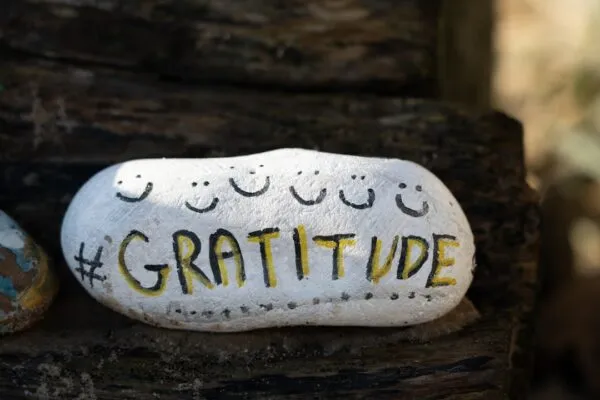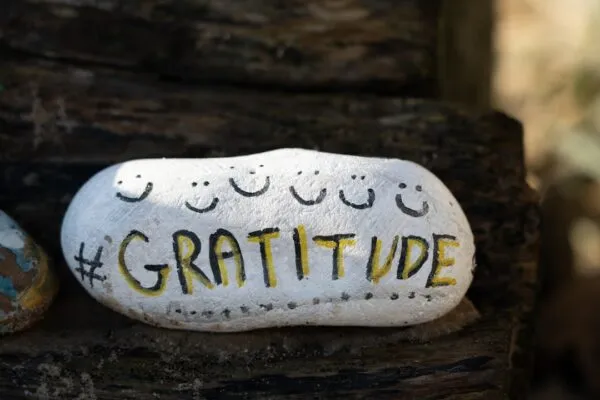
You are about to explore gratitude not as a fleeting sentiment, but as a fundamental shift in perception, a lens through which you can navigate the often turbulent waters of life and discover a richer, more resilient way of being. This approach moves beyond simply acknowledging good fortune; ittrains your mind to actively seek out and appreciate the positive, even when circumstances seem overwhelmingly negative.
Consider your typical approach to personal development or goal setting. Often, it's rooted in identifying what you lack, what's not working, or what needs to be achieved. This creates a constant state of striving, a focus on the deficit that can, over time, breed anxiety and dissatisfaction. Gratitude proposes a radical departure from this paradigm. Instead of beginning with what is missing, you begin with what is present.
Redefining Your Starting Point
Imagine standing at the edge of a vast, uncharted territory. The traditional path is to scan the horizon for all the dangers and obstacles that lie ahead. The gratitude-based approach, however, suggests you first take a moment to appreciate the solid ground beneath your feet, the air you breathe, and the map you already possess. This is not about complacency; it is about building a positive foundation. When your starting point is appreciation for what is currently functioning, for the resources and strengths you already possess, you reduce the anticipatory anxiety that often accompanies future endeavors. This positive bedrock allows for more innovative problem-solving and a less reactive approach to challenges. You are no longer driven solely by the fear of what might go wrong, but by the quiet confidence of what is already right.
The Power of the Present Inventory
This shift in perspective involves conducting a form of inventory, not of your shortcomings, but of your existing assets. This includes tangible things like a roof over your head or food on your table, but also extends to intangible qualities: your resilience, your skills, your relationships, and the lessons learned from past experiences. By consciously cataloging these, you actively counter the pervasive narrative of lack that can often dominate your internal dialogue. This process transforms your internal landscape from one of scarcity, where every perceived deficiency is amplified, to one of abundance, where the existing positives are recognized and leveraged.
Transforming Your Emotional Landscape
The impact of gratitude extends deeply into your emotional state. It is not merely a superficial pleasantry; it is a potent force capable of reshaping the very architecture of your feelings and thought processes, particularly when faced with adversity.
The Antidote to Negative Emotional States
Research suggests that gratitude can act as a powerful antidote to more pervasive negative emotions, such as depression and anxiety. While these states often trap your mind in a cycle of rumination on problems, gratitude offers a means of escape. It is, in essence, a stronger emotional current that can overpower the undertow of negativity. By consciously cultivating feelings of appreciation, you are not simply wishing away your difficulties; you are actively rewiring your brain to prioritize positive stimuli.
Shifting from Survival to Creativity
When you are experiencing stress or facing significant challenges, your brain can enter a "survival mode." This is an evolutionary response designed to identify and neutralize immediate threats. While essential for protection, this state can narrow your focus, making it difficult to see beyond the immediate problem. Gratitude helps to shift your brain out of this survival mode and into a more expansive, "creative brain." This mode is characterized by increased cognitive flexibility, the ability to generate novel solutions, and a broader perspective that allows you to identify opportunities within difficulties. Imagine your mind as a spotlight; when in survival mode, the spotlight is narrow and fixated on the threat. Gratitude broadens that spotlight, illuminating the surrounding landscape for hidden paths and emergent possibilities.
Reframing Challenging Experiences: The Crucible of Growth
Life is not a guaranteed smooth ascent. There will be moments of friction, instances of pain, and periods where progress feels like wading through treacle. Gratitude offers a profound reinterpretation of these difficult experiences, not as mere obstacles to be overcome, but as integral components of your personal evolution.
The Wisdom in Pain and Setbacks
You may have encountered situations that felt exposing, painful, or that significantly slowed your progress. The conventional view often labels these as failures or simply unfortunate events. However, a grateful perspective invites you to see these moments differently. It suggests that these very experiences, precisely because of their difficulty, can be significant contributors to your wisdom and personal growth. The lessons learned when you are pushed to your limits, the resilience forged in moments of vulnerability, and the empathy cultivated through shared hardship are invaluable. Gratitude helps you recognize that these were not simply setbacks, but rather crucibles that refined your character and expanded your understanding of yourself and the world.
Unearthing the Hidden Gifts
Think of a time when you learned a crucial lesson through a difficult situation. Perhaps a failed project taught you the importance of meticulous planning, or a personal disappointment revealed the strength of your support network. Gratitude allows you to unearth the hidden gifts within these experiences. It’s like finding a pearl in an oyster; the outer shell may be rough and uninviting, but the treasure within is precious. By acknowledging the positive outcomes—the acquired knowledge, the deepened self-awareness, the strengthened relationships—even from challenging events, you transform your narrative from one of victimhood to one of victorship.
Perspective During Hardship: Seeing Beyond the Immediate
It is crucial to understand that a grateful mindset does not involve a Pollyanna-ish denial of life's realities. You do not pretend that suffering does not exist or that difficulties are not real. Instead, gratitude provides a framework for maintaining equanimity and perspective within these challenging circumstances.
The Existence of Larger Forces
During times of intense hardship, your focus can become acutely narrowed to the unpleasantness of your immediate situation. Gratitude, in this context, encourages you to acknowledge that there may be greater forces or purposes at play, forces that extend beyond your current, often overwhelming, circumstances. This can be conceptualized in various ways, whether through faith, a belief in the interconnectedness of life, or a realization of the vastness of the universe. This recognition provides a sense of comfort and a broader context, suggesting that your current predicament is not the entirety of existence, nor necessarily the final chapter.
God's Hand in the Ordinary
This perspective often manifests as the ability to see "God's hand in the ordinary," a phrase that speaks to recognizing divine presence or a guiding force in everyday occurrences, even amidst suffering. It is about noticing the small mercies, the unexpected kindnesses, the moments of beauty that persist even when life feels bleak. This is not about a dramatic intervention, but about a subtle recognition of the underlying order or beneficence that continues to operate, providing support and subtle guidance even when you feel lost. This allows you to feel less alone and more connected to something larger than your immediate struggles.
The Calming Effect: A Physiological Re-Stabilizer
Gratitude's impact is not confined to the mental and emotional realms; it exerts a tangible influence on your physiological state, acting as a natural regulator for your nervous system.
Releasing the Grip of Stress
When you are experiencing stress, your body's "fight or flight" response is activated. This leads to elevated heart rate, increased blood pressure, and the release of stress hormones like cortisol. Your muscles tense, and your breathing becomes shallow, creating a state of heightened alert and potential paralysis. Shifting your focus to gratitude has a direct calming effect on this system. By consciously activating feelings of appreciation, you signal to your brain that the immediate threat has receded, initiating a relaxation response. This moves you from a "stressed and stuck" state to one of "possibility and flow."
From Stuckness to Flow
Imagine your nervous system as a river. When you are stressed, the river can become dammed, its flow obstructed by debris. Gratitude acts as a force that can begin to clear those dams. It allows the natural currents of your systems to resume, fostering a sense of ease and allowing for smoother navigation of challenges. This physical relaxation not only feels good but also enhances your capacity for clear thinking, problem-solving, and effective action. You become less reactive and more capable of responding with insight and adaptability.
Revealing the Overlooked Positives: The Art of Noticing
One of the most profound benefits of practicing gratitude is its ability to sharpen your observational skills, allowing you to notice the abundance of good that often goes unnoticed in the rush of daily life or the shadow of difficulties.
The Unseen Triumphs
Gratitude trains you to become a more active seeker of positive experiences. It is like putting on a special pair of glasses that highlight the good. This practice helps you to actively notice accomplishments, both large and small, and to recognize the good things that have occurred throughout your day, week, or year. You begin to discover that, often, far more went right than you initially perceived. This is particularly powerful when you are feeling down, as it provides concrete evidence to counter negative self-talk and feelings of hopelessness.
The Abundance of "What Went Right"
Consider this: even on days that feel overwhelmingly negative, there are almost always elements that have functioned as intended, people who have been kind, or small moments of relief. Gratitude encourages you to actively seek out these instances. It is not about ignoring the difficulties, but about balancing your perception by acknowledging the presence of positive factors. This systematic highlighting of "what went right" builds a more comprehensive and accurate picture of your life, fostering a sense of well-being and resilience.
Promoting Emotional Intelligence: A Cornerstone of Effectiveness
Your capacity for emotional intelligence – the ability to understand and manage your own emotions, and to recognize and influence the emotions of others – is significantly enhanced through regular gratitude practice.
Cultivating Self-Awareness
The act of consciously identifying what you are grateful for requires a degree of introspection and self-awareness. You must pause, reflect, and understand what is contributing to your feelings of appreciation. This regular practice cultivates a deeper understanding of your internal states, your values, and what truly brings you a sense of contentment. This heightened self-awareness is a foundational element of emotional intelligence.
Maintaining Perspective During Uncertainty
In times of uncertainty, it is easy to become overwhelmed by anxieties about the unknown. Gratitude serves as an anchor during these periods. By anchoring yourself in what you are thankful for, you create a stable point of reference that helps you maintain perspective. This is invaluable for leaders and individuals alike. It allows you to navigate ambiguous situations with greater clarity, make more reasoned decisions, and communicate with others from a place of groundedness rather than panic. You become less tossed about by the winds of change and more capable of charting a steady course.
In conclusion, gratitude, when understood and practiced as a way of seeing beyond circumstances, is not a passive virtue but an active and transformative practice. It equips you with a powerful toolkit to reframe your reality, manage your emotions, and navigate the complexities of life with greater resilience, wisdom, and inner peace. You possess the capacity to initiate this shift; the journey begins with consciously choosing to look for the light.
FAQs
What does it mean to practice gratitude as a way of seeing beyond circumstances?
Practicing gratitude as a way of seeing beyond circumstances means focusing on the positive aspects of life despite challenges or difficulties. It involves recognizing and appreciating what one has, which can shift perspective away from negative situations and foster a more hopeful and resilient mindset.
How can gratitude impact mental health during difficult times?
Gratitude can improve mental health by reducing stress, anxiety, and depression. It encourages a focus on positive experiences and strengths, which can enhance emotional well-being, increase feelings of happiness, and promote a more optimistic outlook even in adverse situations.
Are there specific techniques to cultivate gratitude regularly?
Yes, common techniques include keeping a gratitude journal, where individuals write down things they are thankful for daily; expressing thanks to others; mindfulness practices that focus on appreciating the present moment; and reflecting on positive experiences to reinforce a grateful mindset.
Can gratitude change the way people perceive their life circumstances?
Yes, gratitude can alter perception by helping individuals see beyond immediate hardships and recognize the good in their lives. This shift in perspective can lead to greater acceptance, resilience, and motivation to overcome challenges.
Is gratitude linked to any physical health benefits?
Research suggests that gratitude is associated with physical health benefits such as improved sleep quality, reduced symptoms of illness, lower blood pressure, and stronger immune function. These benefits are thought to result from reduced stress and a more positive emotional state.