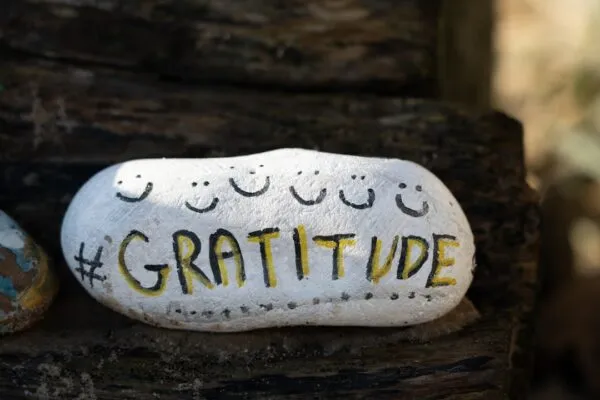
You possess a powerful tool, often overlooked, residing within your own cognitive architecture: your ability to cultivate gratitude. It is not merely a fleeting emotion, but a potent mental filter, capable of reshaping your perception of the world and, consequently, your experience of it. You can learn to employ this filter to navigate the complexities of your existence with greater clarity and resilience. This article explores gratitude as a cognitive mechanism, detailing its impact on your brain, your well-being, and your capacity to respond to life's inherent challenges.
Your brain is a dynamic entity, wired for adaptation and influence. Gratitude, as a consistent practice, actively engages specific neural pathways, fundamentally altering its default processing modes. Consider your brain's tendency to operate on a baseline of habitual patterns. When these patterns are dominated by negativity or threat detection, your cognitive landscape can become a barren terrain, prone to fostering anxiety and distress. Gratitude, however, acts as a counter-frequency.
Rewiring for Resilience: The Brain's Plasticity
The scientific understanding of neuroplasticity, the brain's ability to reorganize itself by forming new neural connections throughout life, provides a fundamental framework for understanding gratitude's impact. Your brain is not a static organ; it is constantly adapting based on your experiences and intentional efforts. When you consciously practice gratitude, you are not just experiencing a pleasant feeling; you are actively participating in the sculpting of your neural architecture.
- Medial Prefrontal Cortex Activation: Research, as evidenced by observations pointing to 2025's leadership impact, highlights the activation of the medial prefrontal cortex (mPFC) through gratitude practices. This region of your brain is crucial for social cognition, empathy, and decision-making. When you express or feel gratitude, the mPFC becomes more active. This increased activity suggests a shift towards more prosocial and reflective cognitive states, moving away from reflexive threat responses. Think of the mPFC as a sophisticated navigation system in your brain. Gratitude helps calibrate this system, allowing you to better understand social cues, assess situations more holistically, and make decisions that are more attuned to opportunities rather than just potential dangers.
- Dopaminergic Reward Pathways: The connection between gratitude and the brain's reward system is another critical aspect. Neuroscientific insights underscore that regular gratitude practice can enhance mood and long-term mental health by stimulating dopaminergic pathways, often referred to as the brain's reward circuitry. When you feel grateful, your brain releases dopamine, a neurotransmitter associated with pleasure, motivation, and reinforcement. This creates a positive feedback loop: the act of being grateful triggers a pleasurable response, which in turn reinforces the behavior of being grateful. This is not unlike how a finely tuned engine responds to optimal fuel, running more smoothly and efficiently. Over time, this consistent stimulation can lead to a more balanced and stable mood, making you less susceptible to dips in emotional well-being.
- Threat Detection and Opportunity Recognition: The information from 2025's leadership impact also points to gratitude's role in enhancing threat detection and opportunity recognition. This might seem counterintuitive: how can focusing on the positive heighten your awareness of threats? The key lies in the quality of your perception. When your default setting is primed for negativity, you are more likely to interpret ambiguous situations as threatening. Gratitude, by shifting your mental filter, can broaden your perspective. It allows you to acknowledge potential risks without allowing them to dominate your cognitive processing. Simultaneously, by fostering a more optimistic outlook, it inherently makes you more receptive to identifying possibilities and strengths that might otherwise go unnoticed. This is akin to adjusting the aperture of a camera: you can choose to focus on a narrow, intense point of light (a threat), or you can widen the aperture to capture a more expansive and nuanced panorama, revealing both potential challenges and valuable opportunities.
The Practical Application of Gratitude: Transforming Your Daily Life
The scientific understanding of gratitude's neurological underpinnings is important, but its true power lies in its practical application. You are not merely a passive recipient of these neurological changes; you are an active agent in their cultivation. Deliberate practices can be integrated into your daily routine, yielding tangible improvements in your mental and even physical health.
Cultivating Gratitude Through Intentional Practices
The concept of gratitude as an intentional stance, as highlighted by the APA, is crucial. It is not something that simply happens to you; it is an active choice, a deliberate orientation towards your experiences. You have the power to cultivate this orientation.
- Gratitude Journaling: One of the most widely recognized and effective methods for cultivating gratitude is through journaling. This practice involves making a conscious effort to record things for which you are thankful. The act of writing down these things, even if they seem small, engages your cognitive processes more deeply than simply thinking them. It provides a tangible record of your blessings and encourages mindfulness of the positive aspects of your life.
- The "Three Good Things" Exercise: A specific and highly effective journaling technique is the "three good things" exercise. This involves identifying and writing down three positive events that occurred during your day, along with a brief explanation of why they happened. This exercise, as supported by practical transformations, is designed to shift your focus from what is going wrong to what is going right. It requires you to actively scan your day for moments of positivity, training your brain to notice and appreciate them.
- Gratitude Rituals: Beyond journaling, establishing daily or weekly gratitude rituals can further solidify the practice. This could involve a moment of silent reflection before meals, expressing appreciation to loved ones verbally, or creating a dedicated space for sharing gratitude within a family or community. These rituals provide consistent opportunities to engage with gratitude, making it a natural and integrated part of your life.
- The Impact on Stress and Depression: The practical transformations demonstrated by these exercises are significant. Research indicates that practices like gratitude journaling and "three good things" exercises can lead to measurable reductions in stress and depression. By consistently directing your attention towards the positive, you are actively counteracting the cognitive biases that can amplify negative experiences. This is similar to using a strong filter to remove static from a radio signal; you are reducing the distracting noise of negativity to better hear the clearer, more harmonious frequencies of your life.
Enhancing Sleep and Physical Health
The benefits of gratitude extend beyond your mental landscape, impacting your physical well-being as well. The UCLA study provides compelling evidence of this connection.
- Reduced Anxiety and Stress: The UCLA findings, which suggest that dedicating just 15 minutes a day, five days a week, for six weeks can yield significant improvements, are particularly noteworthy. This regimen specifically targets reductions in depression, anxiety, and stress. By engaging your gratitude filter, you are essentially dampening the physiological response to stressors. When your brain perceives fewer active threats, your body's stress response mechanisms (like the release of cortisol) are less likely to be triggered.
- Improved Sleep Quality: Anxiety and stress are often significant disruptors of sleep. By mitigating these factors, gratitude practices can indirectly but powerfully improve sleep quality. When your mind is less agitated with worries and rumination, it is better equipped to enter restorative sleep cycles. This can lead to feeling more refreshed and energized, further contributing to positive mental and physical states.
- Heart Health and Life Satisfaction: The UCLA study also points to improvements in heart health and overall life satisfaction. This suggests a holistic impact. A less stressed and anxious mind, coupled with better sleep, can have a positive cascade effect on your cardiovascular system. Furthermore, a general increase in positive affect, fostered by consistent gratitude, naturally contributes to a greater sense of contentment and fulfillment with life. You are not just surviving; you are actively cultivating a sense of thriving.
Gratitude as an Intentional Stance Against Despair
Life, by its very nature, presents adversities. It is not the absence of challenges that defines well-being, but rather your capacity to navigate through them. In moments of significant difficulty, gratitude can serve as an anchor, preventing you from being swept away by despair.
Finding Beauty Amidst Difficulties
The American Psychological Association (APA) emphasizes gratitude as an intentional stance against despair. This is not about ignoring or downplaying hardship, but about consciously choosing to look for the positive, however small, within it.
- Courage to Notice: This intentional stance requires courage. It takes effort to deliberately shift your focus when you are experiencing pain or loss. However, this conscious choice to notice beauty amid difficulties is what allows you to maintain perspective. It prevents you from becoming solely defined by your troubles. Imagine being in a dense fog. It's easy to only see the immediate, unyielding gray. Gratitude is like gaining the ability to spot a distant light, a flicker of possibility, that suggests the fog is not all-encompassing.
- Resilience in Hard Times: By fostering this ability to see beyond immediate difficulties, gratitude builds resilience. When you are acquainted with acknowledging the good, even in dire circumstances, you are better equipped to bounce back from setbacks. You have, in essence, trained your mental musculature to find sources of strength and optimism. This is crucial when facing significant challenges like burnout or job loss, situations where negativity can easily become all-consuming.
- Real Stories of Transformation: The practical transformations mentioned earlier are not abstract concepts; they are echoed in the real stories of individuals who have recovered from burnout or job loss by integrating gratitude into their lives. These narratives serve as powerful testaments to gratitude's capacity to act as a reconstructive force, helping individuals rebuild their lives and find meaning even after significant adversity. They demonstrate that gratitude is not a passive wish, but an active strategy for survival and recovery.
Integrating Gratitude into Your Daily Life: Simple Practices, Profound Gains
The prospect of adding another practice to your already busy life might seem daunting. However, the advice from Samaritan Mental Health emphasizes that the most profound mental health gains can be achieved through simple, integrated practices. You don't need elaborate ceremonies or significant time commitments.
Daily Integration Tips for Lasting Impact
The key to making gratitude a sustainable part of your life is to weave it into the fabric of your existing routines.
- Mindful Moments: Take a few moments throughout your day to pause and acknowledge something you appreciate. This could be the warmth of the sun on your skin, the taste of your morning coffee, or a friendly interaction. These are not necessarily grand events, but small instances of well-being that, when recognized, contribute to a more positive emotional baseline.
- Verbal Expression: Make a conscious effort to express your gratitude to others. A simple "thank you" delivered with sincerity can not only brighten another person's day but also reinforce your own feelings of appreciation. This outward expression creates a reciprocal flow of positivity.
- Before Sleep Reflection: Before you go to sleep, spend a few minutes recalling moments of gratitude from the day. This can help to frame your mind positively as you transition to sleep, reducing the likelihood of dwelling on negative thoughts. This practice, as supported by the health benefits highlighted earlier, can contribute to a more restful night.
- Leveraging Community for Research: Institutions like the Mental Research Institute, by expressing gratitude for their community, are demonstrating the systemic importance of human connections. You too, can leverage these connections. Sharing your gratitude practices with friends or family, or participating in community gratitude initiatives, can provide support and reinforce your commitment. This collective aspect, where gratitude is shared and acknowledged, can amplify its impact.
The Long-Term Outlook: Sustained Mental Fortitude
The consistent application of gratitude practices is not about achieving a state of perpetual euphoria. Instead, it is about building a robust mental fortitude that allows you to navigate life's inevitable ups and downs with greater equanimity. The neuroscience insights are clear: regular gratitude practice rewires the brain for resilience. This means that over time, your brain becomes better equipped to handle stress, regulate emotions, and maintain a more positive outlook. It is like building a strong, protective shell around your mental well-being.
You possess the capacity to intentionally shape your mental landscape. By understanding gratitude as a powerful mental filter, and by actively engaging in its practice, you can unlock a more resilient, balanced, and fulfilling existence. The evidence is clear, from the neurological pathways activated in your brain to the tangible improvements in your daily life, that gratitude is a tool you can wield to navigate the world with greater awareness and grace.
FAQs
What does it mean to use gratitude as a mental filter?
Using gratitude as a mental filter means consciously focusing on positive aspects and things you are thankful for in your daily life, which helps shift your mindset away from negativity and promotes a more optimistic outlook.
How can practicing gratitude impact mental health?
Practicing gratitude has been shown to reduce stress, increase feelings of happiness, improve emotional resilience, and enhance overall mental well-being by encouraging a focus on positive experiences and reducing negative thought patterns.
What are some common ways to incorporate gratitude into daily life?
Common methods include keeping a gratitude journal, regularly reflecting on things you appreciate, expressing thanks to others, and mentally noting positive moments throughout the day.
Can gratitude as a mental filter help in challenging situations?
Yes, applying gratitude during difficult times can help individuals reframe their experiences, find silver linings, and maintain hope, which can improve coping strategies and emotional strength.
Is gratitude the same as ignoring negative emotions?
No, gratitude does not mean ignoring or suppressing negative emotions; rather, it involves acknowledging challenges while intentionally focusing on positive elements to create a balanced and healthier mental perspective.