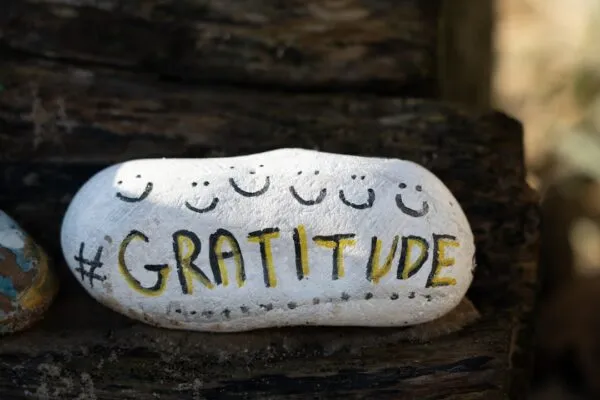
Your understanding of yourself, your identity, is not a static sculpture carved from stone, but rather a dynamic tapestry woven over time. Among the threads that compose this intricate fabric, gratitude emerges as a particularly potent and often overlooked element. You might be inclined to view gratitude as a fleeting emotion, a pleasant but transient response to a fortunate event. However, research and emerging perspectives suggest a deeper, more foundational role for gratitude in shaping who you are. It functions not merely as a reaction but as a foundational building block, a lens through which you interpret experiences, a compass that guides your actions, and ultimately, a resilient anchor in the shifting tides of life.
Your brain, a remarkable organ, is constantly rebuilding and reconfiguring itself based on your experiences and internal states. Gratitude, far from being a passive emotional state, actively participates in this process, influencing the very architecture of your cognitive landscape. When you consciously cultivate and express gratitude, you are, in effect, remodeling your neural pathways.
Redrawing the Brain's Maps: Emotional Regulation and Empathy
Consider the medial prefrontal cortex (mPFC), a region of your brain crucial for emotional regulation and social cognition. Studies indicate that practicing gratitude can lead to increased activation in this area. This heightened activity can translate into a greater capacity to manage your emotional responses, particularly under stress. Instead of being overwhelmed by negative emotions, you might find yourself better equipped to process them, to contextualize them, and to respond with more measured reflection. This enhanced emotional regulation is not just about personal comfort; it directly impacts your interactions with others. By fostering greater emotional stability, gratitude can also pave the way for increased empathy. When you are not consumed by your own distress, you are more readily able to perceive and understand the emotional states of those around you. This capacity for empathy is a cornerstone of meaningful social connection and plays a significant role in defining your identity as a relational being.
The Hippocampus's Archive: Relational Memory and Perspective
Your hippocampus, the brain's primary memory center, is also implicated in the gratitude-identity nexus. Research suggests that gratitude can influence the hippocampus's ability to encode and retrieve relational memories – memories of your interactions with others. When you consistently practice gratitude, you are essentially reinforcing the positive aspects of these interactions within your memory. This can lead to a more positively biased recollection of your social history, influencing how you perceive yourself in relation to others. Furthermore, this recalibration of memory, driven by gratitude, can broaden your cognitive perspective, especially under challenging circumstances. Instead of fixating on the negative, you might be more prone to recall past instances where support was offered, where lessons were learned, or where resilience was demonstrated. This expanded perspective acts like a wider aperture on your life’s experiences, revealing a richer and more nuanced picture of your capabilities and your journey.
Gratitude as a Strategic Pillar of Resilience
In the face of adversity, your identity can feel threatened. The question of "who am I?" becomes particularly acute when your external circumstances are in flux. It is in these moments that gratitude can emerge not as a fragile sentiment but as a disciplined strategy that reinforces your sense of self, ensuring continuity and fostering resilience.
The Discipline of Acknowledgement: Prioritizing and Learning
Gratitude, when approached as a strategy, involves a conscious and deliberate process of acknowledging what is working, even amidst difficulties. This is not about ignoring problems but about recognizing existing strengths, resources, and positive aspects of your situation. This act of prioritization, facilitated by gratitude, helps you to anchor your identity in what is stable and valuable, rather than being swept away by what is transient or negative. Moreover, this disciplined approach encourages learning from incremental progress. When you are grateful for small victories or for lessons learned through setbacks, you are actively building a narrative of competence and growth. This narrative becomes a vital part of your identity, demonstrating your capacity to adapt and evolve. By honestly recognizing these elements, you preserve a sense of continuity, even when the external world feels entirely unpredictable.
Navigating Storms: Preserving Identity Amidst Disruption
Life is replete with disruptions, from personal losses to societal upheavals. During these periods of turbulence, your sense of self can feel precarious. Gratitude acts as a stabilizing force, a bedrock upon which you can rebuild or reaffirm your identity. Instead of allowing disruption to redefine you solely in terms of loss or suffering, gratitude allows you to acknowledge what remains and what has been gained. This is akin to a ship’s captain navigating a storm; while the waves may be high and the winds fierce, the captain's focus remains on the integrity of the vessel and the skill of the crew. Gratitude cultivates this captainal mindset, helping you to maintain your bearing and preserve the core elements of your identity even when the external environment is chaotic. This preserves your resilience, allowing you to emerge from periods of stress not diminished, but perhaps even strengthened in your self-understanding.
Gratitude's Echo in Interpersonal Dynamics
Your identity is not formed in a vacuum; it is profoundly shaped by your interactions with others. Gratitude plays a crucial role in this interpersonal landscape, influencing how you perceive yourself and how you are perceived by those around you. This reciprocal influence strengthens your sense of belonging and reinforces key aspects of your self-concept.
The Mirror of Appreciation: Strengthening Social Bonds
When you express gratitude to others, you are not just being polite; you are actively reinforcing your relational identity. This act of appreciation serves as a mirror, reflecting back to you the value you place on others and the value they, in turn, place on you. This reciprocal appreciation strengthens social bonds, creating a sense of mutual respect and connection. For instance, in the context of leadership, expressing gratitude to your team members can enhance their sense of worth and their commitment to shared goals. Neuroscience studies, reflecting on leadership in 2025, highlight how gratitude in leaders can activate areas of the brain associated with empathy and relational memory in those they lead, fostering a more cohesive and supportive environment. This, in turn, solidifies your identity as a leader who fosters collaboration and positively impacts those under your guidance.
The Language of Kindness: Aligning with Core Values
In an increasingly technologically mediated world, the act of expressing gratitude can extend to interactions with artificial intelligence. While this might seem novel, research in 2026 suggests that expressing gratitude to AI can reinforce your own personal identity values, such as kindness and agreeableness. This aligns with principles of humanistic psychology, which emphasize the importance of self-concept and the alignment of behavior with deeply held values. When you practice gratitude, even in seemingly artificial interactions, you are consciously reinforcing these desirable traits within your own psyche. This consistent behavioral reinforcement helps to solidify your identity as a kind and agreeable individual, demonstrating that your values are not dependent on the recipient but are an intrinsic part of your being.
Gratitude as a Spiritual Anchor
For many, identity is deeply intertwined with their spiritual or religious beliefs. In this context, gratitude can serve as a powerful anchor, providing a sense of continuity and belonging, especially during periods of personal or existential questioning.
Divine Connection: Belonging and Purpose
Discussions in the Christian faith during 2025 and 2026 highlight the concept of true identity being rooted not in external achievements or possessions, but in one's relationship with Jesus Christ. Gratitude plays an implicit role in this understanding. When you are grateful for the blessings you have received, for the guidance you have experienced, or for the simple fact of existence, you are implicitly acknowledging a higher power and your belonging within a divine framework. This sense of belonging fosters a profound sense of purpose and resilience. Amidst life’s inevitable shifts and challenges, this spiritual anchor provides a stable foundation for your identity, ensuring that even as external circumstances change, your core sense of self, rooted in faith and expressed through gratitude, remains steadfast.
Beyond Titles: Unshakeable Self-Worth
In many spiritual traditions, the concept of "true self" or "authentic identity" is central. This authentic self is often portrayed as being beyond the superficial labels of profession, social standing, or material wealth. Gratitude can be a powerful tool for uncovering and embracing this authentic identity. By focusing on what you are grateful for – your innate qualities, your capacity for love, your resilience – you begin to recognize the inherent worth that is independent of external validation. This cultivates an unshakeable sense of self-worth that is not contingent on worldly success or recognition. This spiritual dimension of gratitude helps you to define yourself from within, anchoring your identity in principles that transcend the ephemeral nature of daily life.
Gratitude's Role in Systemic and Personal Well-being
Your identity is not solely an individual construct; it is also shaped by the broader systems within which you operate, including societal structures and communal relationships. Gratitude, as suggested by discussions from the American Psychological Association in October 2025, plays a crucial role in weaving together individual, communal, and systemic resilience, thereby profoundly shaping identity, especially during periods of difficulty.
The Ripple Effect: Communal and Systemic Resilience
When gratitude becomes a cultural norm, it can foster a sense of shared purpose and mutual support within communities. In times of crisis, a grateful community is often a resilient community. This resilience is not merely a matter of individual fortitude but of collective strength, where individuals feel connected and supported. This sense of interconnectedness, nurtured by a shared practice of gratitude, can contribute to systemic resilience as well. For instance, within organizations, a culture of gratitude can lead to improved morale, reduced turnover, and a greater capacity to adapt to changing market conditions. Your identity, in this context, becomes intertwined with the resilience of the groups and systems you are a part of. You see yourself as someone who contributes to and benefits from this collective strength.
The Foundation of Flourishing: Individual Well-being and Identity Formation
Ultimately, the cultivation of gratitude contributes to your overall well-being, which in turn, has a direct impact on how you perceive and define yourself. When you are more resilient, more emotionally regulated, and more connected to others, you are better equipped to engage with life in a meaningful way. This enhanced well-being allows for a more stable and positive self-perception. Gratitude acts as a fertile ground for this flourishing. By consistently acknowledging the good in your life, you are creating a positive feedback loop that strengthens your sense of self-efficacy, your optimism, and your overall life satisfaction. This, in turn, informs your identity, solidifying your understanding of yourself as someone capable of navigating challenges, fostering meaningful connections, and experiencing joy. Your identity is not just what you do, but how you experience and engage with the world, and gratitude profoundly colors that experience.
FAQs
What is the relationship between gratitude and personal identity?
Gratitude influences personal identity by shaping how individuals perceive themselves and their experiences. Regularly practicing gratitude can lead to a more positive self-concept and a stronger sense of connectedness with others, thereby contributing to the development of one's identity.
How does gratitude impact psychological well-being?
Gratitude has been shown to enhance psychological well-being by increasing feelings of happiness, reducing stress, and promoting resilience. These positive effects can reinforce a person's identity as someone who is optimistic and emotionally balanced.
Can practicing gratitude change the way people view their life experiences?
Yes, practicing gratitude encourages individuals to focus on positive aspects of their lives, which can alter their interpretation of past and present experiences. This shift in perspective can lead to a more constructive and appreciative identity.
Is gratitude linked to social relationships and identity?
Gratitude strengthens social bonds by fostering feelings of appreciation and reciprocity. These improved relationships contribute to a social identity that values connection, support, and community.
What are common methods to cultivate gratitude for identity development?
Common methods include keeping a gratitude journal, expressing thanks to others, mindfulness practices focused on appreciation, and reflecting on positive experiences. These practices help integrate gratitude into daily life, supporting the ongoing development of a grateful identity.