You possess the fundamental tools to cultivate a grateful disposition within your family. It is not a complex, esoteric skill requiring specialized training, but rather a consistent, accessible practice woven into the fabric of your daily life. The objective is to demonstrate gratitude not as an obligation, but as an inherent part of navigating the world, akin to how a sapling naturally turns towards sunlight. By integrating simple, repeatable actions into your routine, you can effectively model thankfulness for your children, shaping their perspectives and fostering a more appreciative family culture. This approach moves beyond mere instruction, embedding gratitude in the lived experience of your household.
Your daily interactions represent the most potent classroom for teaching gratitude. These are not isolated events, but rather the ceaseless flow of human connection, each moment offering an opportunity to exhibit thankfulness. Consider the transactional exchanges that punctuate your day – the brief encounters with service workers, the shared spaces within your community. In these moments, you have the power to transform the mundane into a lesson in appreciation.
Acknowledging Essential Services
When you interact with individuals providing essential services, such as cashiers at a grocery store, librarians, or crossing guards, your words and demeanor carry weight. A simple, direct expression of thanks for their work, even for seemingly small tasks, can have a ripple effect. This is not about effusive praise, but about acknowledging their contribution to your day. Stating "Thank you for bagging my groceries" or "I appreciate you keeping us safe at the crossing" demonstrates that you recognize the effort involved. This models the recognition of labor and service, a cornerstone of gratitude. It is like placing a small, polished stone on a path; it is noticeable, appreciated, and makes the journey a little smoother for those who follow.
Expressing Appreciation for the Unseen
Gratitude extends beyond human interactions to encompass the elements and experiences that often go unnoticed. The provision of food, the shelter you inhabit, the simple fact of a pleasant day – these are not guaranteed, but are often taken for granted. Verally expressing appreciation for these elements can reframe their perception for your children. Phrases like "I'm so thankful for this meal" or "It's a beautiful day today; I'm grateful for the sunshine" are simple yet profound. They highlight the abundance and positive aspects of life, fostering a sense of contentment rather than constant seeking. This is akin to a gardener tending to their plants, noticing the growth and the nourishment provided by the soil and sun, rather than solely focusing on potential weeds.
Valuing Relationships and Connections
The people in your life, from close family members to casual acquaintances, are also subjects for your expressions of gratitude. When a friend offers a favor, a neighbor brings over a baked good, or a family member provides support, acknowledging this kindness is crucial. This can take various forms, from a text message to a phone call. Consider the data: 62% of parents model gratitude by paying it forward through small acts of kindness, 60% return favors, 58% send thank-you texts, and 49% make phone calls to express appreciation. These statistics underscore that tangible actions, even small ones, are effective. Returning a favor, even in a different form, demonstrates a reciprocal understanding of helpfulness. Sending a thank-you text is a low-barrier, high-impact way to acknowledge a specific gesture. Making a phone call adds a personal touch, conveying a deeper level of appreciation. These actions reinforce the value of social bonds and the importance of acknowledging the positive influence others have on your life. Your relationships are like a well-tended garden; consistent care and acknowledgment of its benefits yield a richer harvest.
Integrating Gratitude into Family Routines: The Power of Playful Rituals
Beyond spontaneous expressions, embedding gratitude into predictable family routines provides a consistent and gentle reinforcement of its importance. These are not burdensome additions, but rather opportunities to transform everyday moments into intentional practices of thankfulness. The key is to keep these routines brief, engaging, and adaptable to different ages and stages.
The "One Good Thing" Sharing Circle
A simple and highly effective routine is to dedicate a few moments during family meals, bedtime, or even a casual couch check-in to share one thing you are grateful for from the day. This requires minimal preparation and can be as informal as desired. For younger children, this might involve pointing to a favorite toy or describing a fun activity. For older children and adults, it can be a more reflective statement about a personal accomplishment, a positive interaction, or a moment of peace. Research indicates that pandemic families reported kids eventually leading these for emotional benefits, highlighting the inherent appeal and positive psychological impact of such practices. This routine acts as a daily reset button, redirecting focus towards the positive elements of existence, however small. It is like a daily dewdrop that refreshes the spirit, preventing the leaves of your family's well-being from wilting.
Bedtime Reflections: Three Positives
The transition from waking hours to sleep can be a natural time for reflection. Encouraging children to identify three positive aspects of their day before sleeping can be a powerful habit. This can be framed as a game or a gentle prompt. For instance, you might ask, "What was one thing that made you smile today?" or "What is something you learned?" This exercise helps children actively seek out positive experiences, rather than dwelling on any negative events. Experts emphasize modeling as the top way kids learn gratitude from preschool age onward, and this bedtime ritual provides a consistent modeling opportunity. By participating yourself, you demonstrate its value and create a shared experience. This practice is like consciously choosing to look at the stars each night, even when the moon is bright; it expands your awareness of the vastness of positive possibilities.
Couch Check-ins: Spontaneous Gratitude Moments
While structured routines are beneficial, spontaneous moments of gratitude can also be cultivated. Designate times, perhaps during shared leisure activities like watching a movie or playing a game together on the couch, for informal check-ins. This is an opportunity for organic sharing of appreciation. You might notice a child’s effort in a game and comment, "I really appreciate how you helped your sibling with that move." Or, after a shared activity, reflect, "I'm so glad we got to spend this time together; I'm grateful for these moments." These informal acknowledgments act as gentle nudges, reinforcing the idea that gratitude can be expressed in casual, everyday settings. This is like sunlight dappling through leaves; it creates warm, unexpected pockets of appreciation throughout your shared space.
Tangible Manifestations of Thankfulness: Creating Gratitude Artifacts
For some children, particularly younger ones, abstract concepts like gratitude can be made more concrete through tangible activities. Creating physical representations of thankfulness can provide a visual anchor and a sense of accomplishment, solidifying the practice.
The Gratitude Jar or Box
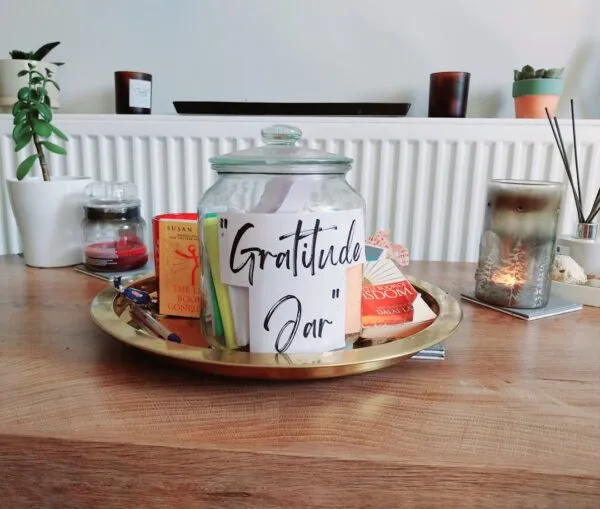
A simple yet effective tool is the gratitude jar or box. This involves providing slips of paper and a container where family members can deposit notes about things they are grateful for. These can be written daily. Periodically, perhaps at the end of the month, you can review the contents of the jar together. This allows for a communal appreciation of the accumulated positive experiences. Simple activities build tangible evidence of thankfulness. This makes gratitude a visible entity, a collection of positive moments that can be revisited and celebrated. It is like collecting smooth, colorful stones from a riverbed; each one represents a moment of beauty and discovery to be cherished.
Gratitude Trees and Notes
For preschoolers and younger children, creative projects can serve as a conduit for expressing gratitude. A "gratitude tree" can be made by drawing a tree on large paper and having children cut out leaf shapes to write or draw things they are thankful for. These leaves can then be glued or taped onto the branches. Similarly, children can be encouraged to create thank-you notes for people they appreciate, even if those notes are never sent. The act of creation itself is a demonstration of thought and appreciation. Craft leaves/poems for preschoolers exemplifies how to adapt gratitude practices to suit early developmental stages, making the concept accessible and engaging. This approach transforms gratitude into an artistic endeavor, a colorful expression of inner feelings.
Tailoring Gratitude for Adolescents: Autonomy and Impact
As children enter adolescence, their understanding of gratitude may evolve. Direct instruction or overly simplistic prompts might be met with resistance. The key for this age group is to foster autonomy and to connect gratitude to their developing sense of self and their impact on the world.
Low-Pressure Prompts for Deeper Reflection
For teenagers, avoid making gratitude feel like a mandatory chore. Instead, use low-pressure prompts that encourage them to think critically about their experiences. Questions like, "What helped you today?" or "What did you find useful or supportive in your interactions?" can lead to more nuanced reflections. These prompts encourage them to identify elements that contributed positively to their day, fostering an appreciation for both external support and their own resilience. This is about planting seeds of inquiry, allowing them to discover the value of gratitude at their own pace, rather than forcing a bloom.
The Power of Volunteering and Contribution
Encouraging adolescents to engage in volunteering or community service can be a profound way to cultivate gratitude. When they actively contribute to the well-being of others, they gain a fresh perspective on their own circumstances and the needs of those around them. Witnessing the impact of their actions can inspire a deep sense of appreciation for what they have and the ability to make a difference. Encourage volunteering as it allows for autonomy and small impacts that make gratitude feel natural, not demanded. This experience of contributing to something larger than oneself is like a river meeting the ocean; it expands and enriches the individual experience by connecting it to a greater whole.
Expanding Emotional Literacy: The Link Between Expression and Appreciation
The ability to articulate and understand emotions is intrinsically linked to the capacity for gratitude. When children possess a robust emotional vocabulary and are encouraged to express their feelings in a healthy manner, they are better equipped to recognize and appreciate the positive emotional states that gratitude fosters.
Discussing Wants vs. Needs and Financial Realities
Engaging children in discussions about wants versus needs and the realities of budgeting can significantly broaden their understanding of appreciation. When they grasp the effort and resources required to meet basic needs, they are more likely to value what they have. You can do this by explaining, in age-appropriate terms, how you make decisions about purchases or how certain services are funded. This transparency can demystify the material aspects of life and foster a deeper appreciation for the provisions you are able to make. Discuss emotions, wants vs. needs, and budget in front of kids to expand their feelings vocabulary as it models healthy expression and fosters appreciation. This is like revealing the intricate workings of a clock; understanding the mechanism allows for a greater appreciation of its function and the time it keeps.
Modeling Healthy Emotional Expression
Your own approach to expressing emotions, both positive and negative, serves as a powerful model for your children. When you can articulate your feelings, acknowledge your frustrations without resorting to destructive behavior, and express joy and contentment openly, you provide them with a blueprint for healthy emotional navigation. This includes expressing appreciation for your own well-being and for the support systems that sustain you. Modeling healthy expression fosters appreciation by demonstrating that acknowledging and processing emotions is a vital part of a fulfilling life, which in turn enhances one's capacity for gratitude. By openly sharing how you feel and how you cope, you are essentially offering a map for navigating the complex terrain of human emotion, a map that includes the landscape of thankfulness.
FAQs
What are some simple ways parents can model gratitude daily?
Parents can model gratitude by regularly expressing thanks, acknowledging others' efforts, keeping a gratitude journal, involving children in acts of kindness, and verbally appreciating everyday moments.
Why is it important for parents to model gratitude for their children?
Modeling gratitude helps children develop a positive outlook, improves emotional well-being, fosters empathy, and encourages respectful and appreciative behavior towards others.
How can parents incorporate gratitude into daily routines?
Parents can incorporate gratitude by sharing what they are thankful for during meals, bedtime conversations, or family meetings, and by encouraging children to do the same.
Can expressing gratitude improve family relationships?
Yes, expressing gratitude regularly can strengthen family bonds, increase mutual respect, and create a more supportive and positive home environment.
Are there any tools or activities that help teach gratitude to children?
Yes, tools like gratitude journals, thank-you note writing, gratitude jars, and family gratitude challenges are effective activities to teach and reinforce gratitude in children.