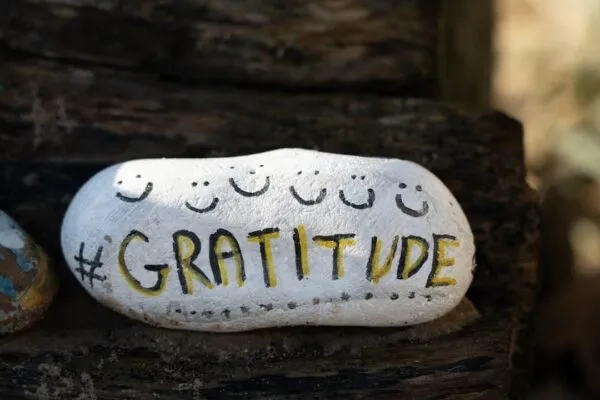
To navigate the complexities of modern life, finding anchors of stability and clarity is crucial. You are likely seeking methodologies that can offer immediate recalibration, especially when faced with the constant flux of daily demands and long-term aspirations. While a singular, universally recognized "question" may not be overtly cataloged in recent discourse, exploring the underlying principles of impactful gratitude practices can shed light on achieving precisely this state of instant perspective. Consider your own experiences: periods of intense focus, when you are locked onto a problem or goal, can narrow your field of vision. It is akin to looking through a telescope at a single star, becoming oblivious to the entire galaxy surrounding it. To regain a panoramic view, a shift in focus is required.
Gratitude, at its core, is an acknowledgment of value, an appreciation for what is present or has been experienced. It is not necessarily an expression of passive contentment, but rather an active recognition of beneficial elements, both tangible and intangible. This act of recognition has been observed to have a demonstrable effect on psychological and even physiological states. The mechanism by which gratitude operates appears to be rooted in redirecting cognitive resources. When faced with adversity or striving towards a goal, your attention might be disproportionately allocated to perceived lacks, obstacles, or future desires. Gratitude, conversely, directs your attention toward existing assets and positive occurrences. This reallocation can act as a powerful counterweight to negativity bias, a cognitive tendency to give more weight to negative experiences than positive ones.
Cognitive Reappraisal Mechanisms
The process of practicing gratitude can be understood as a form of cognitive reappraisal, a strategy where you intentionally change the way you think about a situation. Instead of focusing on the difficulty of climbing a mountain, gratitude prompts you to consider the strength in your legs, the beauty of the vista unfolding with each step, or the support of those who have offered a hand. This shift in interpretation does not negate the reality of the challenge, but it reframes your subjective experience of it. This reframe can unlock emotional resilience, allowing you to approach difficulties with a more resourceful and less overwhelmed mindset.
Neurobiological Correlates of Appreciation
While direct causal links are still under active investigation, neuroscientific research suggests that expressions of gratitude can correlate with increased activity in brain regions associated with reward and social bonding, such as the ventral tegmental area and the nucleus accumbens. Furthermore, some studies indicate a potential link between gratitude practices and reduced levels of stress hormones like cortisol. This suggests that the act of acknowledging and appreciating can elicit physiological changes that promote a sense of calm and well-being, thereby creating fertile ground for broader perspective.
In addition to exploring the transformative power of gratitude through "The One Gratitude Question That Brings Instant Perspective," readers may find it insightful to consider how daily rituals, such as coffee consumption, can also influence their mindset and overall well-being. For a deeper understanding of this connection, check out the article on how coffee shapes your daily routine at this link.
Cultivating an Expanded Awareness
The pursuit of an expanded awareness is a continuous process, much like tending a garden. You cannot simply plant seeds and expect a thriving ecosystem; consistent nurturing, weeding, and watering are required. Similarly, to cultivate a broader perspective through gratitude, you must engage in consistent practices that encourage this shift in awareness. This is not about ignoring problems or difficulties, but rather about preventing them from consuming your entire cognitive landscape. It is about building a robust internal framework that can accommodate both challenges and blessings without becoming solely defined by the former.
The Influence of External Factors on Internal States
Your internal state, your perception of the world, is not solely a product of internal mechanisms. External factors, such as the environment you inhabit and the individuals you interact with, inevitably shape your outlook. Gratitude practices, whether individual or communal, can foster a more positive and supportive external environment. When you express appreciation, you not only acknowledge a benefit but also reinforce a relationship or a positive aspect of your surroundings. This can, in turn, create a reciprocal flow of positivity, further enhancing your sense of perspective and connection.
The Role of Mindfulness in Gratitude
Mindfulness, the practice of paying attention to the present moment without judgment, is intrinsically linked to effective gratitude. To be grateful for something, you must first be aware of its presence. A mindful approach allows you to notice the small details, the subtle comforts, the often-overlooked kindnesses that form the tapestry of your daily existence. Without mindfulness, your gratitude might remain superficial, a mere acknowledgment of grand gestures rather than a deep appreciation for the constant, subtle currents of positivity that flow around you.
Deconstructing the "One Gratitude Question" Concept
While a singular, universally codified "gratitude question" for instant perspective remains elusive in recent documented practices, the underlying principle is well-established. What differentiates a question that provides perspective from one that merely elicits a superficial response is its capacity to provoke a fundamental reorientation of thought. It must act as a catalyst, shifting your focus from an overwhelming singular point to a broader panorama. Consider the difference between asking "What's wrong with this picture?" and "What's right about this picture?". The former can lead to an endless loop of criticism, while the latter, when applied genuinely, can reveal hidden strengths and positive attributes.
The Power of Specificity in Inquiry
The efficacy of a deliberative question often lies in its specificity. A vague inquiry like "What are you grateful for?" can sometimes lead to generic answers. However, questions designed to focus on specific domains of experience can yield more profound insights. For instance, Judy Wilkins-Smith's approach of first naming one positive from the day, and then asking "Who am I grateful for?", illustrates a structured method for expanding awareness. This structured inquiry moves from a personal, immediate observation to a relational acknowledgment, thereby broadening the scope of consideration.
The Impact of "Why" vs. "What"
The framing of a question can also significantly influence the response. Questions beginning with "What" often solicit a description of an object or situation. Questions beginning with "Why," especially when exploring the reasons behind a positive experience, can delve deeper into the underlying mechanisms and values associated with that experience. While not directly an expression of gratitude itself, understanding the "why" behind a positive encountered can certainly deepen one's appreciation for it. This exploration of the foundational elements of positive experiences can foster a more robust and lasting sense of gratitude.
Practical Application and Strategic Integration
Integrating gratitude practices into your daily life is not about adding another overwhelming task to an already crowded schedule. It is about strategically weaving these practices into the fabric of your existing routines. The goal is to create moments of deliberate reflection that can serve as anchors, particularly during periods of high stress or uncertainty. Think of it as developing a mental toolkit, where each tool, when applied appropriately, offers a unique solution to a particular challenge.
Micro-Practices for Daily Impact
The most effective gratitude practices are often those that are simple and easily integrated into your day. These "micro-practices" act as small, consistent nudges, steering your attention towards appreciation. Examples include taking a moment before a meal to acknowledge the nourishment it provides, or before sleep to identify one positive interaction or event from the day. These short, intentional pauses can accumulate over time, gradually shifting your baseline perspective.
Gratitude as a Growth-Oriented Strategy
In the context of personal development and goal-setting, gratitude is increasingly recognized not as a passive feeling, but as an active strategy. A popular concept in 2026 discussions positions gratitude as an "underrated tool for personal development." This perspective emphasizes that by acknowledging your current strengths, resources, and support systems—all facilitated through gratitude—you build a more solid foundation upon which to plan and execute future goals. It prevents the common pitfall of focusing solely on what is lacking, which can lead to feelings of inadequacy and paralysis.
In exploring the profound impact of gratitude on our daily lives, you might find it interesting to read about how cultivating a positive mindset can enhance productivity, especially in remote work settings. A related article discusses various strategies for maintaining motivation and focus while working from home, which can be complemented by the gratitude question that brings instant perspective. For more insights, check out this ultimate guide to working from home.
The Transformative Potential of Acknowledgment
The act of simple acknowledgment, when focused through the lens of gratitude, possesses a remarkable capacity for transformation. It is not about wishing for things to be different, but about recognizing the value in what is. This subtle yet profound shift can be the catalyst for profound changes in your outlook, your behavior, and ultimately, your life trajectory. It is akin to discovering that the key to unlocking a heavy door was not brute force, but the simple turning of the lock.
Overcoming Negative Bias Through Appreciation
Your brain is often hardwired to detect threats and potential dangers, a survival mechanism that can inadvertently amplify negative experiences. Gratitude acts as a conscious countermeasure to this inherent bias. By actively seeking out and acknowledging positive aspects of your life, you begin to recalibrate your internal alarm system, reducing its oversensitivity to perceived threats and enhancing its ability to register positive stimuli. This creates a more balanced and resilient mental state.
Enhancing Resilience and Well-being
The consistent practice of gratitude has been linked to numerous benefits for overall well-being, including enhanced resilience in the face of adversity. When you have a well-honed sense of appreciation for the good in your life, you are better equipped to withstand setbacks. The challenges you face do not disappear, but your capacity to bounce back from them is strengthened. This resilience is not a magical shield, but rather a cultivated disposition to find strength and hope even amidst difficult circumstances. The proactive recognition of blessings, as highlighted in spiritual gratitude prayers for 2026, emphasizes seeking divine direction without relying solely on personal strength, suggesting a framework where gratitude fosters humility and reliance on a higher power, thereby contributing to a broader, less self-centered perspective.
FAQs
What is the main idea behind the gratitude question mentioned in the article?
The article discusses a specific gratitude question designed to help individuals gain instant perspective by focusing on positive aspects of their lives, which can improve mood and outlook.
How does asking a gratitude question bring instant perspective?
By prompting individuals to reflect on what they are thankful for, the gratitude question shifts attention away from negative thoughts and encourages appreciation, leading to a more balanced and positive viewpoint.
Can practicing gratitude regularly improve mental health?
Yes, regular practice of gratitude has been shown to reduce stress, increase happiness, and enhance overall mental well-being by fostering a more optimistic mindset.
Is the gratitude question suitable for all age groups?
Yes, the gratitude question is a simple and adaptable tool that can be used by people of all ages to cultivate mindfulness and appreciation in daily life.
How can someone incorporate the gratitude question into their daily routine?
Individuals can integrate the gratitude question by setting aside a few moments each day, such as in the morning or before bed, to reflect on and write down things they are grateful for, thereby reinforcing positive perspective.