You stand at a crossroads, the landscape of your present moment stretching before you, a canvas awaiting your brushstrokes. While grand pronouncements and seismic shifts often dominate narratives of personal transformation, there exists a more granular, yet profoundly powerful, force at play. This force, often imperceptible in its initial manifestation, is the subtle moment gratitude changes everything. It is not a thunderclap, but a quiet dawn, gradually illuminating the contours of your world.
Gratitude, in its most nascent form, might appear as a fleeting acknowledgment. Consider the simple act of noticing the warmth of the sun on your skin during a walk, or the precise flavor of your morning coffee. These are not monumental revelations, but micro-observations. Yet, it is within these tiny fissures of awareness that the seeds of significant change are sown.
The Foundation of Perception
Your perception is the bedrock upon which your reality is constructed. If this foundation is perpetually riddled with the fissures of discontent or the cracks of unfulfilled desire, the structure of your experience will inevitably be unstable. Gratitude acts as a subtle, yet potent, mortar, reinforcing this foundation and creating a more resilient framework for your daily life.
The Shifting Sands of Focus
The human mind possesses a remarkable, and often unintentional, capacity for selective attention. You are apt to hone in on what is lacking, what is wrong, what could be better. This often-unconscious bias can create a feedback loop, where perceived deficiencies are amplified, and existing positives are relegated to the background noise. Gratitude, however, offers a powerful counter-mechanism. It is akin to adjusting the aperture of your internal camera, bringing into sharp relief the elements that are present and functional, rather than those that are absent or malfunctioning.
The Echo Chamber of the Mind
Your thoughts, much like sound waves in an enclosed space, can reverberate and amplify. If these thoughts are predominantly characterized by complaint or a sense of entitlement, you create an echo chamber of negativity. Introducing moments of gratitude, even small ones, provides a new frequency, a different resonance. This new sound can, over time, begin to drown out the persistent echoes of dissatisfaction, creating a more harmonious internal soundscape.
In exploring the transformative power of gratitude, a related article titled "The Black Old Bike Parked Beside White Wall" delves into the simple yet profound moments that can evoke feelings of appreciation and mindfulness. This piece complements the themes discussed in "The Subtle Moment Gratitude Changes Everything," highlighting how everyday experiences can shift our perspective and enhance our overall well-being. To read more about this insightful exploration, visit The Black Old Bike Parked Beside White Wall.
The January 9, 2026 Vanguard: A Modern Perspective
The digital landscape, particularly platforms like YouTube, has become a fertile ground for contemporary discourse on personal development. The video "The French NP," released on January 9, 2026, offers a particularly astute perspective on gratitude, framing it as an essential compass for navigating the year ahead. This perspective moves beyond generalized benefits and delves into actionable applications of gratitude.
Gratitude as a Strategic Compass
The aforementioned video implicitly suggests that in 2026, and by extension, in the unfolding of your own present, gratitude is not merely a passive emotion but an active strategy. It is a navigational tool that can guide you through the complexities of everyday existence. The emphasis on "choosing gratitude" implies agency; it is a decision, not an inherent state.
Charting the Course: Wins, Work, and Waiting
The video's framework for 2026 highlights specific areas where gratitude can be strategically applied:
Recognizing "Wins"
These are not necessarily grand victories, but rather the successful completion of tasks, the achievement of small goals, or even simply navigating a challenging situation without succumbing to its difficulties. Acknowledging these "wins" through gratitude solidifies them in your consciousness, preventing them from being overshadowed by subsequent challenges. This is akin to marking milestones on a map; each one reinforces the progress you have made.
Appreciating "Work"
This encompasses the effort you expend. It can be the labor you perform for financial compensation, the unpaid work of maintaining a household, or the intellectual exertion involved in learning a new skill. Gratitude for your capacity to work, for the opportunities to contribute, and for the very acts of exertion can transform a potentially burdensome obligation into a source of purpose and fulfillment. It reframes the struggle as a testament to your capabilities.
Navigating "Waiting"
Periods of waiting are an unavoidable aspect of life, whether it is for a promotion, a personal breakthrough, or the resolution of a complex problem. These periods can often be fertile ground for frustration and anxiety. However, the strategic application of gratitude can transform waiting from a state of passive discontent into an active period of observation and preparation. It allows you to appreciate the stillness, the opportunity for reflection, and the potential for unseen growth that often accompanies periods of pause.
Intercepting Anxiety: The Gratitude Shield
The concept of "intercepting anxiety with gratitude" is a particularly potent idea emerging from this contemporary perspective. Anxiety often thrives on what is uncertain, what might go wrong, and what you do not have. Gratitude, conversely, focuses on what is present, what is secure, and what has been provided.
The Proactive Shield
Instead of waiting for anxiety to take root, gratitude can be employed proactively. When you feel the tendrils of unease begin to creep in, consciously shifting your focus to something you are grateful for acts as a powerful counter-agent. It is like deploying a defensive mechanism before the attack fully materializes. You are not denying the existence of potential problems, but rather strengthening your internal defenses with the acknowledgment of present positives.
The Momentary Reprieve
Even a brief moment of sincere gratitude can provide a crucial reprieve from the grip of anxiety. It is a breath of fresh air in a suffocating atmosphere. This immediate, albeit temporary, shift in focus can disrupt the cascading thoughts that fuel anxiety and provide the mental space needed to reassess and regain composure.
Savoring Moments: The Elixir of Presence
The final element highlighted in this modern view of gratitude is the importance of "savoring moments." This goes beyond mere acknowledgment; it implies an active engagement with and appreciation of the present experience.
The Art of Deep Taste
Savoring is the art of truly tasting the experiences of your life. It is about slowing down enough to perceive the nuances, the textures, and the subtle flavors that often pass by unnoticed in the rush of daily life. This practice elevates ordinary moments into extraordinary ones, imbuing them with a deeper significance.
The Anti-Dote to the Mundane
In a world that often prioritizes novelty and constant stimulation, the ability to savor is an antidote to the creeping feeling of mundanity. It is the capacity to find richness and depth in the seemingly ordinary, to recognize that even the most routine aspects of life can hold moments of quiet beauty and profound satisfaction.
The Subtle Shift: From Reaction to Resonance
The transformation that occurs when gratitude becomes a cultivated practice is not a sudden rupture, but a gradual recalibration of your internal operating system. You move from a reactive mode, where you are buffeted by external circumstances, to a resonant mode, where you are more in tune with your inner landscape and the world around you.
The Law of Attraction, Reimagined
While the popular interpretation of the "law of attraction" can sometimes imply a passive wish-fulfillment, gratitude offers a more grounded and active reinterpretation. By consistently focusing on and appreciating what you have, you cultivate a disposition that is more open to receiving further abundance, not through a magical summoning, but through a heightened awareness and receptivity to opportunities that align with your positive outlook.
The Butterfly Effect of Appreciation
The principle of the butterfly effect, where a small change can have large, far-reaching consequences, is strikingly applicable to gratitude. A single, seemingly insignificant moment of genuine appreciation can set in motion a chain reaction of positive shifts in your attitude, your interactions, and your overall experience of life.
The Re-Wiring of the Brain
Neuroscience is increasingly demonstrating that gratitude is not just a pleasant feeling, but a potent force for neuroplasticity. Regularly practicing gratitude can literally re-wire your brain, strengthening neural pathways associated with positive emotions and resilience. It is akin to building new, well-trodden paths in a dense forest, making it easier to navigate towards positivity in the future.
The Tangible Manifestations: Beyond Abstract Benefits
While the internal shifts are profound, the subtle moments of gratitude also have tangible repercussions that extend into the external world. These are not always dramatic, but they are persistent and impactful.
The Strengthening of Relational Bonds
When you express gratitude to others, you are not merely offering polite words; you are acknowledging their value, their efforts, and their presence in your life. This act of recognition fosters deeper connections, builds trust, and creates a more supportive and reciprocal environment. It is like tending a garden; consistent positive reinforcement yields a more vibrant and flourishing ecosystem of relationships.
The Alleviation of Physical and Mental Strain
Numerous studies have indicated a correlation between gratitude and improved physical and mental well-being. This is not a magical cure, but a consequence of the reduced stress response and the enhanced sense of contentment that gratitude fosters.
Reduced Stress Hormones
A consistent practice of gratitude has been shown to lower cortisol levels, the body's primary stress hormone. This reduction in chronic stress can have far-reaching benefits for your cardiovascular health, immune function, and overall sense of well-being.
Enhanced Sleep Quality
By quieting the anxious mind and fostering a sense of peace, gratitude can contribute to more restful and restorative sleep. The absence of rumination and worry, replaced by a focus on appreciation, creates a more conducive environment for sleep.
Increased Resilience
When faced with adversity, individuals who habitually practice gratitude tend to exhibit greater resilience. Their ability to find silver linings, appreciate the lessons learned, and maintain hope is significantly enhanced. Gratitude acts as a buffer against the corrosive effects of setbacks.
The Cultivation of Perspective
Gratitude offers a powerful tool for perspective-taking. It allows you to step back from immediate problems and acknowledge the larger context of your life, recognizing the many elements that are functioning well.
The Rebalancing of the Scales
When you are focused on what is lacking, the scales of your perception are perpetually tipped towards the negative. Gratitude helps to rebalance these scales, reminding you of the significant weight of positive aspects, both big and small.
The Unveiling of Hidden Opportunities
By shifting your focus from problems to appreciation, you become more attuned to opportunities that might otherwise go unnoticed. A grateful heart is an open heart, more receptive to possibilities and solutions.
In exploring the transformative power of gratitude, one might find inspiration in the delightful culinary experience of making blueberry pancakes. This simple act can evoke feelings of appreciation for the small joys in life, much like the themes discussed in "The Subtle Moment Gratitude Changes Everything." For those interested in enhancing their breakfast routine while embracing gratitude, a related article offers a delicious recipe for blueberry pancakes that perfectly complements this mindset. You can check it out here.
Making Gratitude a Practice, Not a Performance
The true power of gratitude lies not in sporadic declarations or forced expressions, but in its consistent, subtle integration into the fabric of your daily life. It is about cultivating an inner landscape where appreciation is the natural flora, not an imported ornamental plant.
The Ritual of the Daily Pause
Establish a small, consistent ritual. This could be a few moments upon waking, before a meal, or before sleep, where you intentionally bring to mind one or two things for which you are grateful. It is not about exhaustive lists, but about focused intention.
The Morning Acclimation
As you greet the day, before the demands and distractions of the external world fully assert themselves, take a moment to acknowledge something positive. This could be the comfort of your bed, the prospect of a new day's learning, or the simple fact of your breath.
The Midday In-Breath
During the day, find moments to consciously pause and inhale appreciation. This might be during a commute, a break from work, or while waiting in line. Acknowledge a pleasant interaction, a task completed, or a beautiful sight.
The Evening Settling
As the day draws to a close, reflect on the small victories, the moments of connection, or the simple comforts that punctuated your hours. This practice can help to transition you from the activity of the day to a state of peaceful rest.
The Gratitude Journal: A Chronicle of Grace
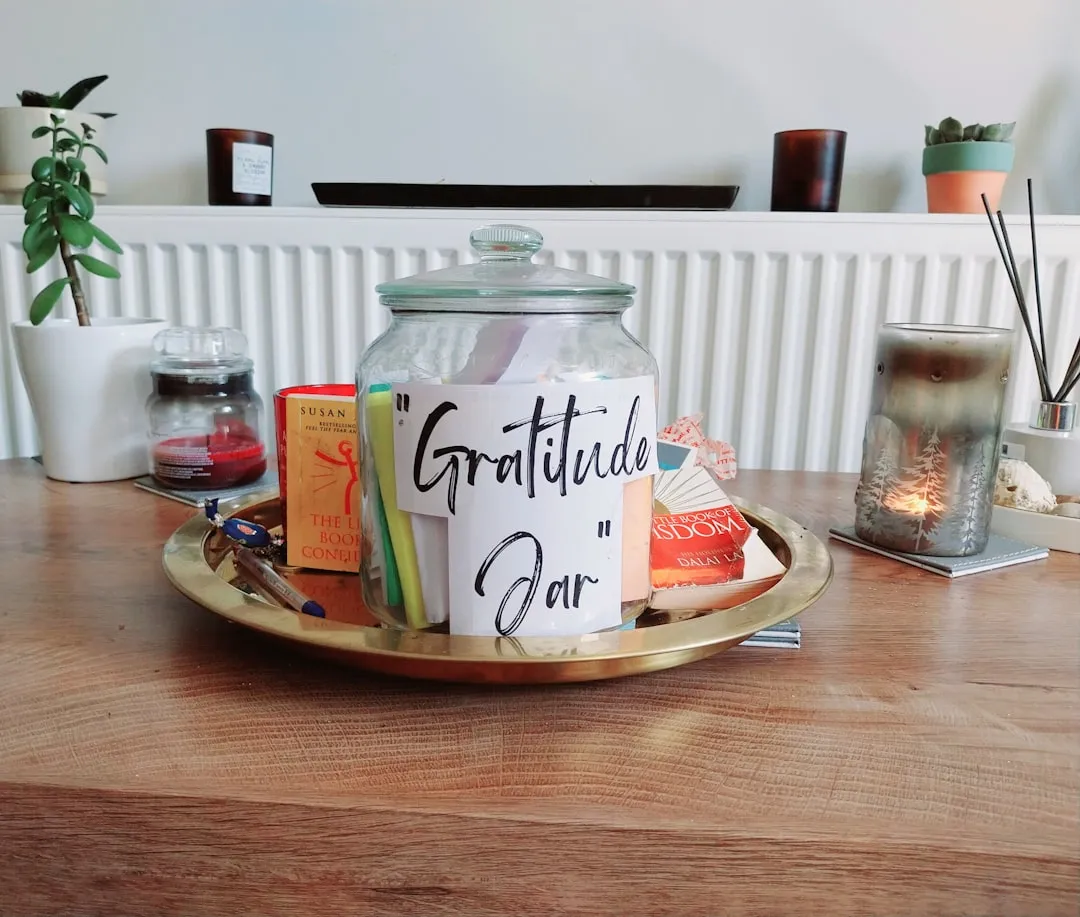
A gratitude journal is a physical or digital space where you can record your moments of appreciation. This act of writing solidifies the feelings and can serve as a powerful reminder of the blessings in your life, especially during challenging times.
The Seedbed of Reflection
Your journal becomes a seedbed for reflection. When you revisit past entries, you can witness the tapestry of positive experiences that have woven through your life, often in ways you may have forgotten.
The Anchor in Stormy Seas
During periods of difficulty, your gratitude journal can act as an anchor, grounding you in the awareness of past joys and present blessings, providing a sense of stability amidst turmoil.
Sharing Gratitude: The Ripple Effect
While internal gratitude is powerful, expressing it to others amplifies its effects. It creates a positive feedback loop, not only benefiting the recipient but also reinforcing your own sense of appreciation.
The Language of Acknowledgment
Learn to speak the language of acknowledgment. Be specific in your expressions of gratitude, highlighting the particular actions or qualities you appreciate. This specificity lends greater weight and sincerity to your words.
The Reciprocity of Kindness
When you express gratitude, you often inspire it in return. This fosters a culture of appreciation and kindness, transforming your interactions and relationships into more positive and supportive exchanges.
The subtle moment gratitude changes everything is not a singular event, but a continuous unfolding. It is the quiet, persistent shift in your internal compass, guiding you towards a richer, more resilient, and more fulfilling experience of life. It is the gradual rebuilding of your perceptual foundation, the fine-tuning of your internal resonance, and the quiet blossoming of a more appreciative you.
FAQs
What is the main idea behind "The Subtle Moment Gratitude Changes Everything"?
The main idea is that practicing gratitude, even in small or subtle moments, can have a profound impact on one’s overall well-being, mindset, and relationships.
How does gratitude influence mental health according to the article?
Gratitude helps reduce stress, increase happiness, and improve emotional resilience by shifting focus from negative thoughts to positive aspects of life.
Can gratitude improve relationships?
Yes, expressing gratitude can strengthen relationships by fostering appreciation, enhancing communication, and building trust between individuals.
What are some practical ways to practice gratitude mentioned in the article?
The article suggests simple practices such as keeping a gratitude journal, verbally expressing thanks, and taking moments throughout the day to acknowledge things one is grateful for.
Is the impact of gratitude immediate or gradual?
The article explains that while some benefits of gratitude can be felt immediately, such as improved mood, the most significant changes often develop gradually with consistent practice.