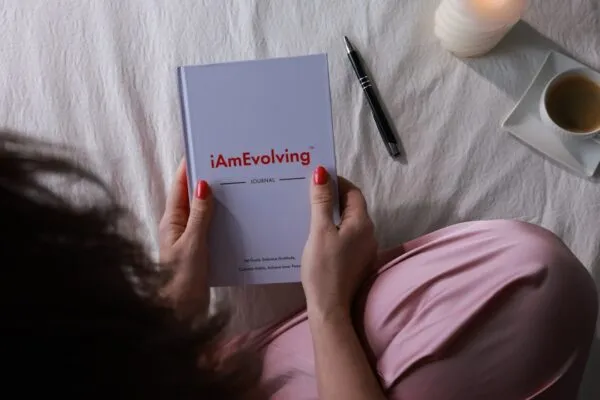
Gratitude quotes, upon initial encounter, often function as an unexpected deceleration in your day. You might be navigating a torrent of tasks, a relentless stream of information, or simply the inherent momentum of modern existence, and then, a handful of words appears. These words, carefully chosen and often distilled from profound human experience, can feel like a deliberate interruption, a mandated interlude in the continuous motion. This article examines why these concise expressions of thankfulness possess this potent pausing capability, drawing on contemporary perspectives on mindfulness, psychology, and personal well-being.
Your engagement with gratitude quotes is not merely a passive reception of text. It is an active, albeit often unconscious, engagement with your own internal landscape. When faced with a well-crafted gratitude quote, your cognitive processes are subtly redirected. Instead of continuing to chase the horizon of future accomplishments or dwelling on past regrets, your attention is tethered, however momentarily, to the present. This temporal anchoring is a crucial component of how these quotes exert their influence.
Reorienting Cognitive Flow
The typical flow of your thoughts can be likened to a river. Sometimes, it's a placid stream, and other times, it's a raging torrent. Gratitude quotes, in this metaphor, act as strategically placed dams or weirs. They don't stop the flow entirely, but they force a localized deceleration, allowing the water (your thoughts) to pool and become more observable. This redirection is vital because the constant forward momentum of daily life often prevents you from truly acknowledging what is already in existence.
Shifting from "Must-Do" to "Is"
Your mind is often oriented towards future imperatives: "I must achieve this," "I need to finish that," "I should be doing more." These obligations create a sense of perpetual motion, a feeling that you are always on the cusp of something yet to arrive. Gratitude quotes, by their very nature, compel you to shift your focus from the prospective "must-do" to the present "is." They prompt an internal inventory of what is actively present, a stark contrast to the future-oriented tasks that consume your mental energy. This is not about negating future goals, but about providing a counterpoint to the relentless drive that can lead to burnout.
The Salemi Framework: Acknowledging Presence
Mike Salemi's insights on gratitude, as noted in his 2026 podcast, provide a valuable framework for understanding this pausing effect. He posits that gratitude quotes disrupt the common cognitive trap: "I can't feel grateful because my life isn't where it should be." This internal narrative often perpetuates a cycle of dissatisfaction. The quote, however, invites a different perspective. It suggests that the very act of pausing to read and reflect on the statement of gratitude can inherently acknowledge what is present. This shift moves the focus from an idealized, future state to the tangible reality of the now.
Identifying Internal Resistance
The act of reading a gratitude quote aloud, as suggested by Salemi, introduces a further layer of engagement. This is not simply about understanding the words intellectually, but about experiencing their resonance within your more subtle bio-chemical systems. When you speak the words, you may become acutely aware of internal blocks – the unspoken resistances, the mental gymnastics your brain performs to avoid acknowledging certain feelings or realities. This vocalization can act as an unexpected diagnostic tool, revealing these "mental blocks" in a way that silent reading might not, thereby enabling a more profound, "bodily felt gratitude" rather than a purely intellectual exercise.
The Restorative Power of the Deliberate Halt
In a world that frequently rewards speed and constant productivity, the deliberate pause is often perceived as an inefficiency, a deviation from the optimal path. However, scientific perspectives increasingly highlight the restorative and even performance-enhancing qualities of these moments of stillness. Gratitude quotes, in this context, serve as catalysts for activating these beneficial physiological and psychological responses.
Activating the Parasympathetic Nervous System
The relentless demands of modern life often keep your sympathetic nervous system – your "fight or flight" response – in a state of low-grade activation. This can lead to elevated cortisol levels and a chronic sense of stress. The pause induced by a gratitude quote, however small, can act as an invitation for your parasympathetic nervous system – your "rest and digest" system – to take the reins. This shift is not merely a pleasant feeling; it has tangible biochemical effects.
Cortisol Regulation and Joy Hormones
As highlighted by MyPacificHealth's discussion on daily pauses, the activation of the rest response can directly contribute to lowering cortisol levels. This reduction in stress hormones is a critical component of overall well-being. Simultaneously, this shift can stimulate the release of "joy hormones" – neurotransmitters like dopamine, serotonin, and oxytocin. The gratitude quote, therefore, doesn't just offer a moment of peace; it initiates a cascade of positive physiological changes that can genuinely alter your mood and outlook.
Embracing Emotional Complexity
A significant aspect of the pause offered by gratitude quotes is their capacity to hold both positive and negative emotions simultaneously. In your rush to feel better, you might be inclined to suppress difficult emotions, believing that gratitude and hardship are mutually exclusive. However, the MyPacificHealth article suggests that embracing pauses can teach your "overwhelmed minds to feel grateful and grounded simultaneously." This is a sophisticated emotional skill.
Acknowledging Pain and Finding Thanks
This capacity to hold joy and pain together is a hallmark of emotional resilience. A gratitude quote might appear during a period of significant difficulty. The pause it encourages allows you to acknowledge the pain you are experiencing without letting it entirely overshadow the possibility of finding gratitude for small things that persist. It's not about dismissing your struggles, but about creating space for a more nuanced emotional experience where thankfulness and hardship can coexist. This integration is crucial for long-term emotional strength.
Clearing the Mental Clutter for Appreciation
Your mind, when functioning at its usual pace, can become a densely packed environment, a metaphorical attic filled with the detritus of past thoughts, future worries, and present distractions. This clutter can obscure your ability to perceive and appreciate the subtle beauties and inherent positives that exist all around you. Gratitude quotes, when embraced with intention, can act as a decluttering tool, clearing the noise to reveal what matters.
The Paradox of Slowness
In a culture that glorifies busyness, the idea of embracing "slowness without guilt" can feel counterintuitive. Yet, Post-Journal's 2026 resolution piece underscores its importance. This doesn't mean idleness; rather, it suggests a conscious recalibration of your pace. It's about creating pockets of unhurried time – quieter mornings, moments of unhurried contemplation – that allow for a different kind of processing.
Creating Space for Reflection
These deliberately unhurried hours are not empty voids. They are fertile grounds for reflection. When you are not constantly rushing from one stimulus to the next, your mind has the capacity to process information more deeply and to make connections that would otherwise be missed. A gratitude quote, encountered during one of these slower moments, is more likely to be absorbed and to resonate, serving as a gentle nudge towards present-moment appreciation rather than being lost in the cacophony.
The Metaphor of a Clean Windowpane
Consider your mind to be like a windowpane. When it is smudged and grimy with the dust of daily anxieties and incessant activity, your view of the outside world – the world of present blessings – is distorted and obscured. Gratitude quotes, particularly when approached with a commitment to slowness, act like a gentle cleaning cloth. They wipe away the film of distraction, allowing the light of appreciation to shine through more clearly.
Reconnecting with the Immediacy of Experience
This clearing of mental clutter is not about achieving a state of perpetual bliss. It is about reconnecting with the immediacy of your experience. It allows you to notice the warmth of the sun on your skin, the sound of a bird's song, the quiet comfort of a familiar object. These are the small, consistent elements of your environment that often go unacknowledged when your mental windowpane is clouded. Maya Angelou's perspective, which emphasizes the uniqueness of each day, is particularly relevant here. Her view suggests a deep appreciation for the singular unfolding of existence as it happens, a perspective that is best accessed when the mind is clear enough to observe it without judgment or distraction.
The Cognitive Re-framing Mechanism
Gratitude is not an innate, immutable state. It is, to a significant extent, a learned response and a practiced perspective. Quotes that articulate gratitude can serve as cognitive re-framing mechanisms, subtly altering the way you interpret your circumstances and your internal dialogue. They provide alternative narratives to the default settings of complaint or dissatisfaction.
Shifting From Scarcity to Abundance
A fundamental aspect of many gratitude quotes is their subtle shift from a perspective of scarcity to one of abundance. Even in challenging circumstances, these quotes often point to what remains, what is still possible, or what has already been provided. This is not a denial of genuine hardship, but an invitation to acknowledge the elements of sufficiency that are often overlooked.
The Subtle Power of "Enough"
The concept of "enough" is a powerful counterpoint to the modern drive for "more." Gratitude quotes often implicitly celebrate the state of "enoughness" – enough to sustain you, enough to find joy, enough to experience connection. By highlighting these existing provisions, they help to counteract the pervasive feeling of lack that can fuel dissatisfaction and anxiety. This re-framing can be profoundly liberating, as it frees you from the endless chase and allows for contentment with present realities.
Challenging the Narrative of Lack
Your internal narrative can be a powerful architect of your reality. If your dominant internal story is one of what you lack – opportunities missed, possessions not acquired, relationships unfulfilled – then your perception will naturally gravitate towards these deficiencies. Gratitude quotes serve as external prompts to challenge this self-limiting narrative.
Introducing the "What If" For Good
Instead of dwelling on "what if I fail?" or "what if I'm not good enough?", gratitude quotes encourage a parallel consideration: "What if there is something good here?" or "What if I already have enough?" This introduction of the "what if" for good, rather than for dread, can be a subtle but potent force in altering your emotional and cognitive landscape. It opens the door to possibilities of contentment and appreciation that might otherwise remain invisible.
The Embodied Experience of Appreciation
While much of our engagement with the world can be intellectual, gratitude, at its deepest level, is an embodied experience. It is felt in the body, not just thought in the mind. Gratitude quotes, through their simplicity and directness, can act as conduits for this embodied appreciation, bypassing the overthinking mind and reaching a more visceral level of experience.
Bridging the Mind-Body Divide
The common tendency is to treat the mind and body as separate entities, with the mind often dictating our perceived limitations or potentials. However, the science of psychoneuroimmunology shows how deeply interconnected they are. Gratitude quotes, when genuinely received, can facilitate a sense of ease and well-being that is not just a mental construct but a physical sensation. The "bodily felt gratitude" mentioned by Mike Salemi emphasizes this crucial connection.
The Physical Manifestations of Thankfulness
When you truly feel thankful, there can be physical manifestations: a loosening in your chest, a warmth spreading through your body, a sense of lightness. Gratitude quotes, by providing the cognitive trigger, can help to unlock these physical sensations. The pause they create allows the body to register and respond to the sentiment of thankfulness. This is distinct from simply thinking "I should be grateful." It is about the physical sensation that accompanies genuine appreciation.
The Resonance of Simple Truths
The power of gratitude quotes lies not in their complexity, but in their often profound simplicity. They distill complex human emotions into accessible phrases. This resonates on a deeper, perhaps more intuitive, level. The words themselves become vessels for carrying afeeling of well-being and connection.
Directing Attention to the Heart
In traditions of mindfulness and contemplative practice, there is often an emphasis on directing attention towards the heart center. Gratitude quotes can serve as a gentle, non-intrusive way to facilitate this redirection. The pause they offer invites you to move your awareness away from the busy executive functions of the brain and towards a more central, embodied sense of being. This is where the grounding effect, mentioned in the context of MyPacificHealth, truly takes hold. It's not just about acknowledging external gifts, but about cultivating an internal state of being that is open to appreciation. The gratitude isn't just a thought; it becomes a felt sense, an anchor in the present moment, a quiet knowing that grounds you amidst life's inevitable flux.
FAQs
What is the main idea behind the article "Why Gratitude Quotes Feel Like a Pause"?
The article explores how gratitude quotes create a moment of reflection and calm, acting as a mental pause that encourages appreciation and mindfulness in daily life.
Why do gratitude quotes have a calming effect on people?
Gratitude quotes prompt individuals to focus on positive aspects of their lives, which can reduce stress and foster a sense of peace, making them feel like a brief, calming pause.
How can reading gratitude quotes impact mental health?
Regularly reading gratitude quotes can improve mental well-being by promoting positive thinking, increasing feelings of happiness, and helping to manage anxiety and negative emotions.
Are gratitude quotes effective for everyone?
While many people find gratitude quotes helpful for reflection and emotional balance, their impact can vary depending on individual preferences and openness to practicing gratitude.
Can gratitude quotes be used as a daily practice?
Yes, incorporating gratitude quotes into a daily routine can serve as a simple and effective way to cultivate mindfulness and appreciation, contributing to overall emotional resilience.